 GOAT TATTOO
Fine Line vs. Micro Realism Tattoo: What's Actually Different
Published September 7, 2026
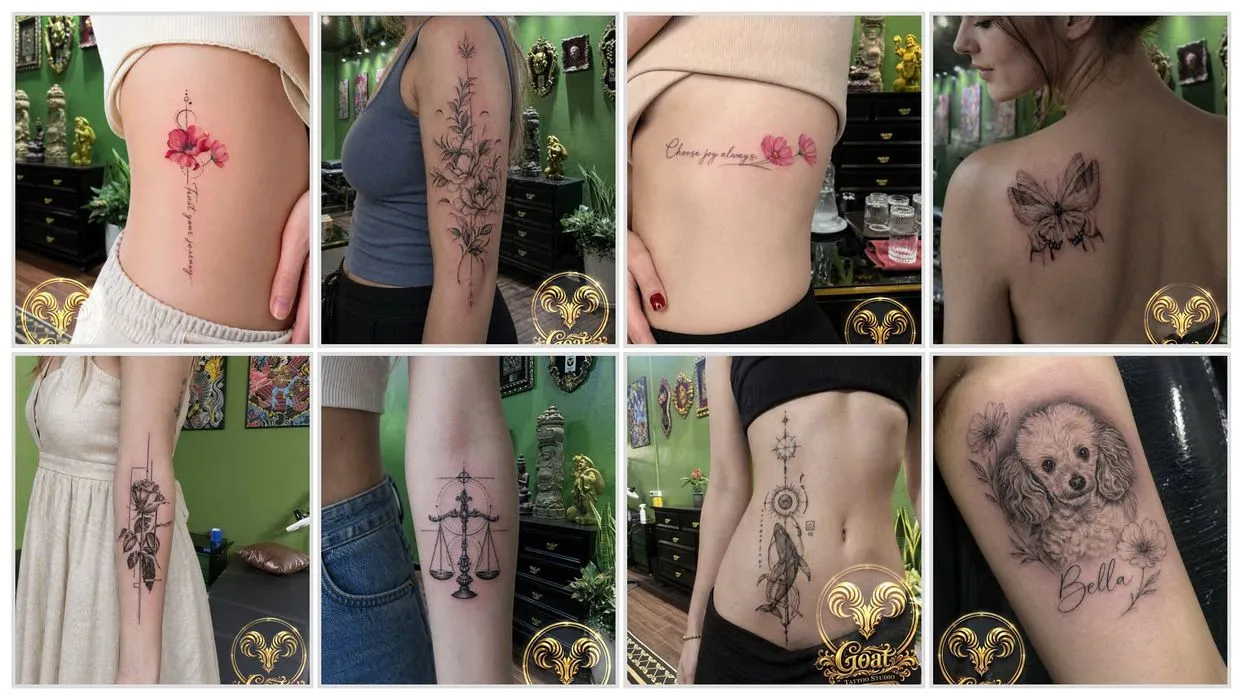
“Fine line” and “micro realism” both mean small, delicate-looking tattoos, and that surface similarity is exactly why they get mixed up — but the actual technique behind each is genuinely different.
What fine line actually is
Fine line work is built from thin, consistent-width linework — typically a single-needle or small liner — with little to no shading. The image reads as a clean outline or minimal linear illustration rather than a rendered picture; depth and detail come from the design itself, not from tonal variation.
What micro realism actually is
Micro realism packs full photorealistic shading and tonal range — highlights, shadows, gradients — into a small physical space, aiming for the tattoo to genuinely read as a tiny photograph rather than a line drawing. Technically, this is the harder of the two: fitting a full realistic tonal range into a few centimeters without it blurring together takes real precision.
Why they age differently
- Fine line’s risk is spreading, not fading. Because the lines start so thin, skin’s natural aging and ink migration over years can cause them to soften and spread, sometimes losing crispness faster than a bolder line would — a real, documented tattoo-aging consideration, not a flaw specific to any one artist.
- Micro realism’s risk is losing definition. The tonal shading that makes it look photorealistic on day one is exactly what’s hardest to keep distinct at a tiny scale as skin ages — shadows and highlights that were clearly separated can blur into each other over time.
Neither style is more “permanent” than the other — they just carry different specific aging risks worth knowing before you commit to a very small placement.
Which one actually fits what you want
- Choose fine line if: you want a minimal, linear look, you’re drawn to simple symbols or delicate botanical or lettering designs, and you’re comfortable with the honest tradeoff on long-term crispness at very small sizes.
- Choose micro realism if: you specifically want a small piece to look like a photograph — a portrait, a detailed object — and you understand it demands real technical skill from your artist and carries its own aging tradeoff around shading definition.
What to expect at GOAT Tattoo Studio
Tell us which look you’re actually going for, and we’ll be honest about whether your idea and placement are realistic at the size you have in mind — some designs genuinely need more room to hold up over time, regardless of which style you choose.
Related Guides
Ready to book your tattoo in Hanoi?
Send us your idea and preferred dates — we'll reply with a clear quote before you sit in the chair.
Book Now