 GOAT TATTOO
Maori Tattoo Symbols: What They Actually Mean
Published September 26, 2026
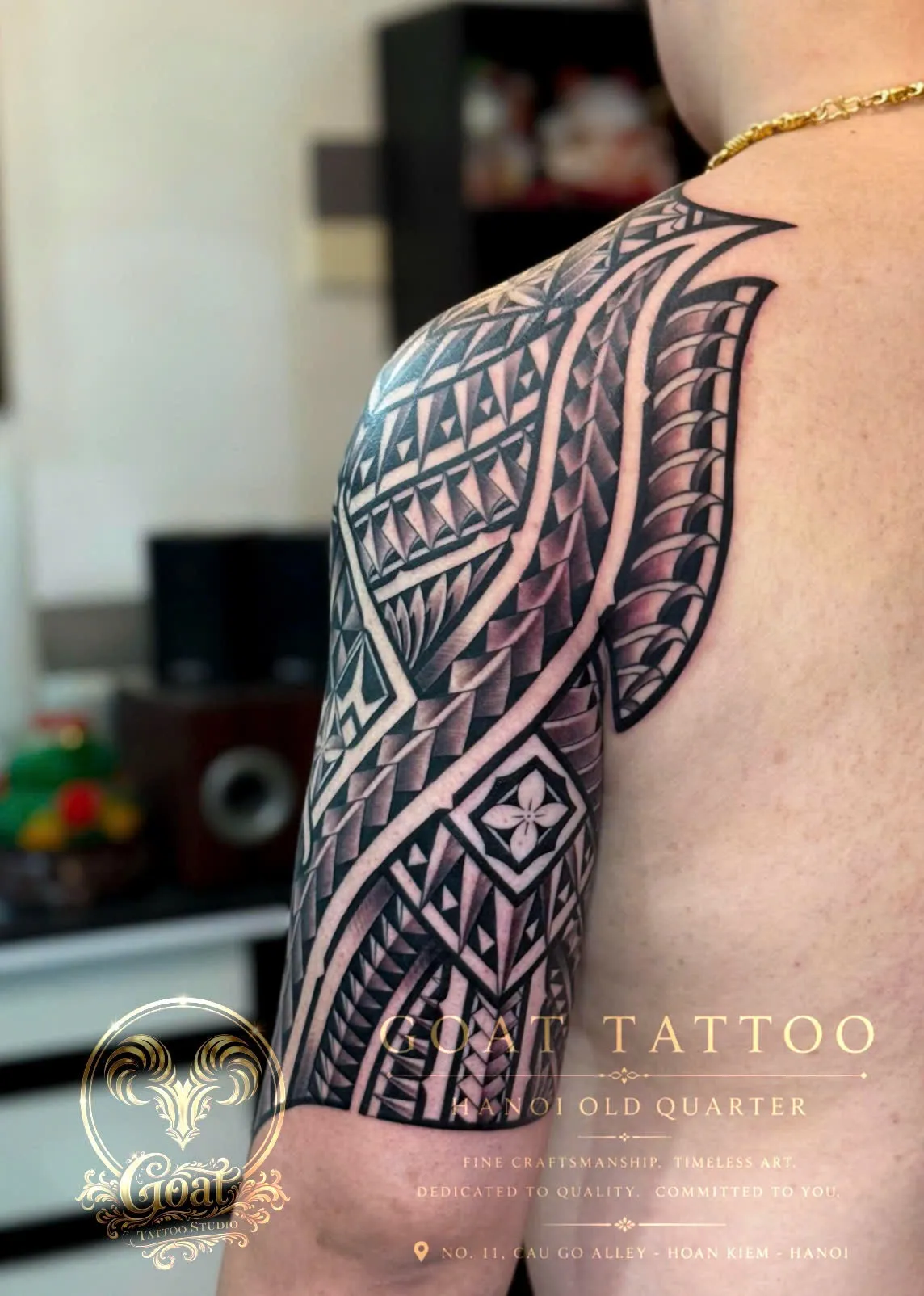
Māori tā moko carries some of the most recognizable symbols in tattooing, and also some of the most commonly flattened into generic “meaning lists” online. The individual motifs below are real and well-documented — but it’s worth understanding upfront that traditional tā moko wasn’t built by picking symbols off a list. Each moko was personal, telling the story of an individual’s whakapapa (genealogy), status, and life story through its specific combination and placement. Modern Polynesian-tribal tattooing borrows these motifs as a shared visual vocabulary, which is a different — and worth being honest about — thing from wearing an authentic, personally-earned moko.
Koru
A spiral shape based on an unfurling silver fern frond, one of the most iconic Māori symbols. It represents new life, growth, and a return to a point of origin — the fern frond unfurls but the spiral shape always echoes back toward its center, which is why koru is closely tied to ideas of continuity, peace, and personal growth that circles back to strengthen where you started.
Enata
Small human figures used to represent people — ancestors, family members, or specific relationships in someone’s life. How the figures are arranged actually changes the meaning: figures placed together might represent unity or family bonds, while their orientation and spacing can indicate specific relationships or life events. This is one of the clearest examples of why personalized composition matters more than the symbol alone.
Hei matau
A stylized fish hook, historically tied to prosperity, abundance, and safe travel across water — a meaningful symbol for a seafaring culture where the ocean was both a life source and a genuine danger. It also carries a broader sense of respect for the sea and for Tangaroa, the guardian of the ocean in Māori tradition.
Manaia
A mythological guardian figure, often depicted with a bird’s head, human body, and fish tail — representing the connection between earth, sky, and sea. The manaia is traditionally understood as a spiritual guardian and messenger, watching over balance between these three realms, and is one of the more spiritually significant figures in Māori design rather than a purely decorative one.
Pikorua (the double spiral)
Two koru joined together, representing the bond between two people or two paths — friendship, partnership, or a meeting of two life journeys. It’s one of the more common choices for pieces meant to represent a specific relationship rather than an individual’s own story.
The honest part worth understanding
These meanings are real and well-documented, but a genuine, personal tā moko was never assembled by combining symbols for their individual meanings the way a Western tattoo “flash sheet” might be — it was created in conversation with a tohunga tā moko (a master practitioner) who designed something specific to that person’s own genealogy and story. What’s tattooed in studios globally today, including pieces inspired by these motifs, sits in the broader Polynesian-tribal design tradition rather than a claim to individual tā moko in the traditional sense — worth knowing so you can talk to your artist about what you’re actually getting rather than assuming a symbol list tells the whole story.
What to expect at GOAT Tattoo Studio
Linker, our Maori and Polynesian specialist, can talk through which of these elements genuinely fit the composition and placement you’re considering — see the style come together in our Maori-Polynesian gallery, and we’ll have an honest conversation about meaning and composition at consultation rather than just picking symbols off a list.
Related Guides
Ready to book your tattoo in Hanoi?
Send us your idea and preferred dates — we'll reply with a clear quote before you sit in the chair.
Book Now