 GOAT TATTOO
Is a Polynesian Tribal Tattoo Cultural Appropriation? An Honest Answer
Published September 26, 2026
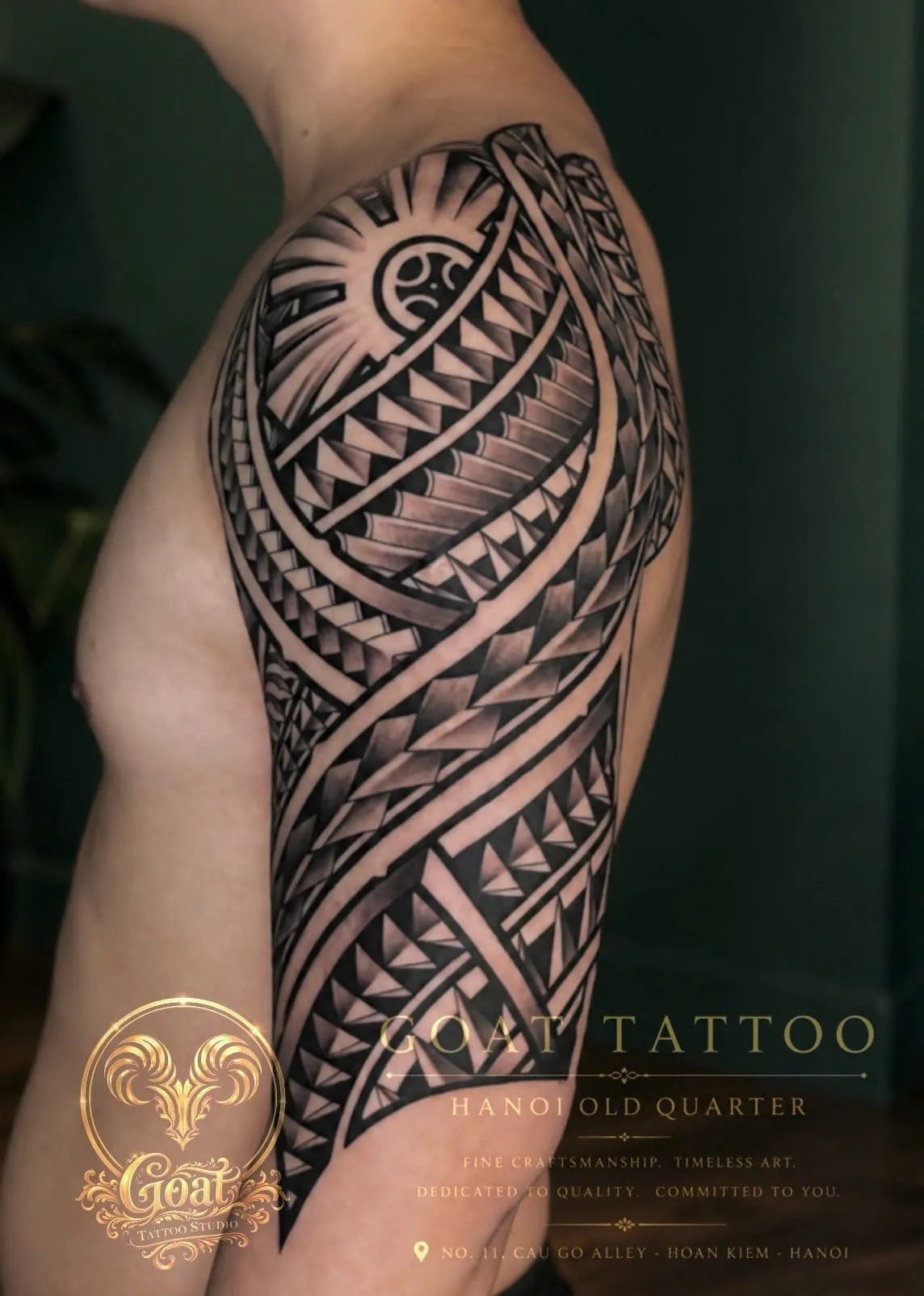
This is a genuinely fair question to ask, and it deserves a straight answer rather than either a defensive dismissal or an overcautious “just don’t.” The honest version is more nuanced than either of those, and it’s worth actually understanding rather than guessing.
The distinction that actually matters
Polynesian-tribal tattooing as a style — the blackwork patterns, shark teeth, spirals, wave motifs, and turtle imagery covered in our Polynesian symbols guide — has circulated as a shared, recognizable tattoo genre worldwide for decades, worn by people of every background. This is meaningfully different from a small number of specific practices that some Pacific cultures still keep separate and reserved. The Samoan pe’a and malu are the clearest example: sacred, ritually significant markers of status and identity, applied by a specialist practitioner through a process tied to specific cultural standing within Samoan society — not a design available to request regardless of background. Māori facial tattooing (moko kauae for women, mataora for men) sits in a similar category, tied specifically to Māori identity and genealogy.
So the honest, non-evasive answer is: getting a tattoo that draws on the broader Polynesian-tribal visual tradition is generally understood as a legitimate, long-established global tattoo genre, not inherently appropriation — while seeking out the small number of specific sacred practices reserved for cultural insiders (facial moko, a formal pe’a or malu) crosses into something genuinely different, and is worth avoiding regardless of how compelling the imagery looks.
What actually matters more than the yes/no question
Beyond that one clear line, most of what determines whether this is done respectfully comes down to a few practical things:
- Understanding what you’re actually getting. Knowing that koru represents growth, or that shark teeth represent protection, is a genuinely different relationship to the tattoo than picking a pattern purely because it looks striking with zero curiosity about where it comes from.
- Choosing an artist who treats the tradition with real knowledge, not as an interchangeable clip-art library — someone who can talk honestly about a pattern’s origin and won’t just combine random elements without any sense of how they’re traditionally used.
- Not claiming a specific personal genealogy or cultural authority you don’t have. Wearing the style is different from claiming your specific tattoo tells your own whakapapa the way an authentic tā moko tells a Māori person’s — that distinction is worth being honest about, even just to yourself.
None of this requires being Polynesian, having Pacific Islander heritage, or getting anyone’s individual permission — it requires the same basic respect you’d bring to any tradition that isn’t originally yours: genuine curiosity rather than indifference, and an artist who actually knows what they’re doing rather than one treating it as generic “tribal” filler.
Where GOAT Tattoo Studio stands on this
We tattoo within the broader Polynesian-tribal tradition — the shared, globally-worn style, not a claim to authentic tā moko, pe’a, or malu, which belong specifically to the cultures that practice them. Linker, our specialist in this style, is happy to talk honestly at consultation about where a pattern comes from and what it actually means, and we’d rather have that conversation upfront than let anyone walk in assuming every pattern is interchangeable.
What to expect at GOAT Tattoo Studio
If this style genuinely speaks to you, we’re glad to do the work — and we think the tattoo means more when you actually understand what you’re wearing. Browse our Maori-Polynesian gallery, and bring any questions about meaning or origin to your consultation; we’d genuinely rather talk it through than assume you already know.
Related Guides
Ready to book your tattoo in Hanoi?
Send us your idea and preferred dates — we'll reply with a clear quote before you sit in the chair.
Book Now