 GOAT TATTOO
Color & Japanese-Style Tattoos: What to Actually Look For
Published August 17, 2026
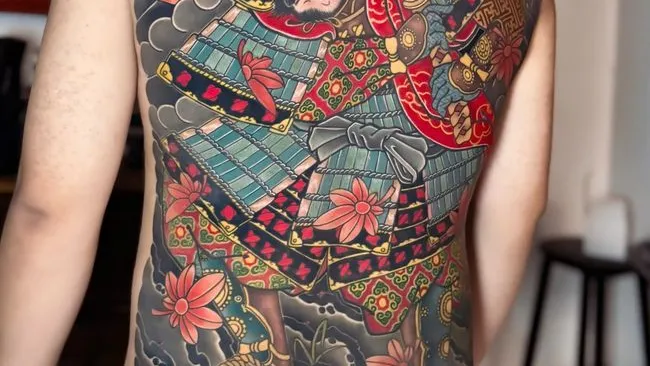
Short answer: yes — color and Japanese/neo-traditional tattooing is one of GOAT Tattoo Studio’s four core specialties in Hanoi’s Old Quarter, alongside fine line, realism, and geometric/mandala work.
Japanese-style tattooing (often called irezumi) traces back to Edo-period woodblock prints and the bold, mythological imagery of artists like Kuniyoshi — koi, dragons, phoenixes, waves, and folklore figures rendered with heavy black outlines and flowing background elements. Modern color and neo-Japanese work descends directly from that tradition, even when the subject matter has shifted, and it’s worth knowing what actually separates a well-executed piece in this style from one that just borrows the imagery. For what each individual motif actually means, see our guide to Japanese tattoo motif meanings.
What separates good composition from a floating image
The single biggest technical marker in this style is background integration. Traditional Japanese work was never meant to sit as an isolated image on skin — wind bars, waves, clouds, and florals connect the central subject to the body’s natural shape, so the piece reads as one continuous composition rather than a picture pasted onto an arm or back. A koi with no surrounding water, or a dragon with no wind bars carrying the eye around it, is usually a sign the composition wasn’t built with the body in mind. The other marker worth checking in a portfolio: line consistency and color saturation. Outlines should stay even in weight throughout, and color should sit solid and uniform — patchy or uneven saturation, especially in red and black fills, is one of the more common quality issues in this style specifically, because it takes real repetition to build solid color evenly.
What to know before booking
- This style needs real canvas space. Because the composition relies on connecting elements (waves, wind bars, background florals), a Japanese-style piece is genuinely harder to do well as a small, isolated tattoo — it’s built for bigger areas like a full sleeve, back, or thigh where the background has room to work.
- Color work often means more than one session. Solid, even saturation takes real time to build, especially across a larger composition — don’t expect a full color piece in a single sitting the way a small linework tattoo might work.
- Healing color takes a bit more patience. Saturated areas can look slightly duller as they heal before settling into their final vibrancy — this is normal, not a sign something went wrong.
What to expect at GOAT Tattoo Studio
If you’re drawn to this style, browse our color and Japanese-style gallery for real composition examples — pay attention to how backgrounds connect to subjects, not just the subjects themselves. During consultation, we’ll talk through placement and scale early, since getting the canvas size right is what makes this style actually work.
Planning a Japanese tattoo in Hanoi? Our Japanese tattoo page has prices, the artists who do this style and recent work.
Related Guides
- Ink Wash (Sumi-e) Tattoos: Style Guide, Ideas & How They Age
- Japanese Back Piece Tattoo Guide: Subjects, Background & Sessions
- Japanese Tattoo Motifs and What They Actually Mean
- How to Find Tattoo Design Ideas Before You Book in Hanoi
- Color vs. Black & Grey Tattoo Price
- Samurai Tattoo Meaning: Bushido, Ronin and Cherry Blossoms
- Oni Mask Tattoo Meaning: Demon, Protector or Both?
- Japanese Wave Tattoo Meaning: Hokusai's Great Wave and Irezumi Water
Ready to book your tattoo in Hanoi?
Send us your idea and preferred dates — we'll reply with a clear quote before you sit in the chair.
Book Now