 GOAT TATTOO
Ink Wash (Sumi-e) Tattoos: Style Guide, Ideas & How They Age
Published November 24, 2026
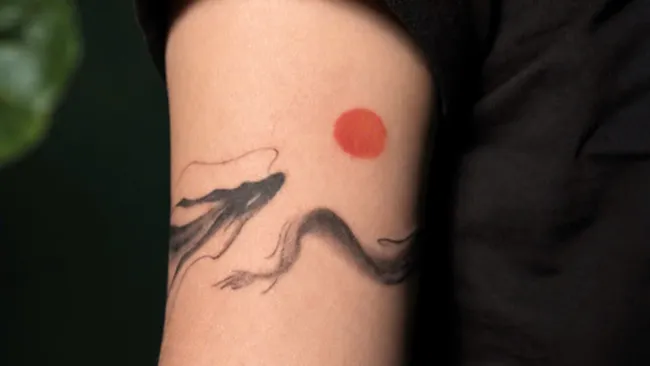
Short answer: an ink wash tattoo copies the look of East Asian brush painting, called sumi-e in Japan and shuimo (水墨) in China. Instead of hard outlines and solid colour, it uses loose brush strokes, soft grey washes that fade into the skin, lots of empty space and often one small red accent such as a sun or a seal stamp. Dragons, koi, cranes, bamboo, mountains and blossoms are the classic subjects. It is quiet, elegant and very different from bold traditional Japanese tattooing.
This guide explains where the style comes from, what makes it work on skin, the best subjects and how to plan one that still looks good years later.
Where the style comes from
Ink wash painting began in China more than a thousand years ago and spread to Japan, Korea and Vietnam. Painters used black ink ground from an ink stick and water, and a brush. With one load of ink they could make a stroke that goes from deep black to pale grey. The goal was not to copy every detail, but to catch the spirit of a subject in as few strokes as possible. What you leave empty matters as much as what you paint.
Ink wash tattoos borrow three ideas from this tradition:
- The brush stroke: edges that look painted, with dry, broken ends where the “brush” lifts off.
- The wash: soft grey shading made by diluting black ink, with no outline around it.
- Empty space: bare skin is part of the design, like the white paper in a painting.
Ink wash vs traditional Japanese tattoos
Traditional Japanese tattooing (irezumi) uses heavy black outlines, solid colour and a full background of waves, wind bars or clouds. It is built to be read from across a room. Ink wash is the opposite: no strong outlines, very little colour, and a lot of open skin. Both can show the same dragon, but they feel completely different. If you want the bold version, see our colour Japanese style guide.
The red accent
Many ink wash tattoos have one spot of red: a rising sun, a plum blossom, or a small square stamp. In brush painting, the red seal (hanko in Japanese) is the artist’s signature. On skin it works as a focal point that makes the black and grey feel even softer. Keep it small; one red element is usually enough.
The best subjects
- Dragons: the most popular. A few brush strokes can suggest a whole body moving through clouds. See our dragon guide.
- Koi: perseverance, often swimming through a grey wash of water. See the koi guide.
- Cranes and birds in flight: long life and freedom, perfect for open space.
- Bamboo: strength that bends but does not break, one of the classic subjects painters learned first.
- Plum, cherry or lotus blossoms: often the place for a touch of red or pink. See the cherry blossom guide.
- Mountains and landscapes: misty peaks and a small sun, good for a forearm or calf band.
- Tigers and horses: energy shown with fast, rough strokes.
- The enso circle: a single brush circle from Zen practice, meaning completeness and the present moment.
For more on what Japanese subjects mean, see our Japanese motif guide.
How ink wash tattoos age
This is the most important part. Soft grey washes are the lightest ink in a tattoo, and light ink fades first. Very thin, pale strokes can also spread slightly as they heal. To keep an ink wash tattoo looking like a painting and not a blur:
- Keep some true black: the head of the dragon, the darkest strokes, the eye. These anchor the design as the soft parts fade.
- Do not go too small: brush texture needs room. A dragon or landscape works best on the upper arm, forearm, thigh, calf or back, not on a finger.
- Protect it from the sun: UV fades grey wash faster than anything else. Sunscreen once healed makes a real difference.
- Expect a touch-up: soft work sometimes needs a light top-up after healing.
Our watercolor and illustrative guide covers the same questions for colour washes.
At GOAT Tattoo Studio
The photo at the top of this page is a piece from our studio: an ink wash dragon in a few loose black and grey strokes, curling under a red sun on the upper arm. Our gallery also has ink wash dragons with cherry blossoms on the arm and with pink lotus flowers on the hip and thigh. In a consultation we decide where the darkest strokes go, how much empty skin to keep and how big the piece needs to be so the brush texture survives. For prices and artists, see our Japanese tattoo page.
Related Guides
- Dragon Tattoo Meaning: East vs. West
- Japanese Tattoo Motifs and What They Actually Mean
- Color & Japanese-Style Tattoos: What to Actually Look For
- Watercolor & Illustrative Tattoos: What to Actually Look For
- Cherry Blossom Tattoo Meaning: Sakura, Plum or Peach Blossom?
- Koi Fish Tattoo Meaning: Dragon Gate Legend
- Bonsai Tattoo Meaning: Patience, Balance and Resilience
Ready to book your tattoo in Hanoi?
Send us your idea and preferred dates — we'll reply with a clear quote before you sit in the chair.
Book Now