 GOAT TATTOO
Naga Tattoo Meaning: Not a Dragon
Published September 10, 2026
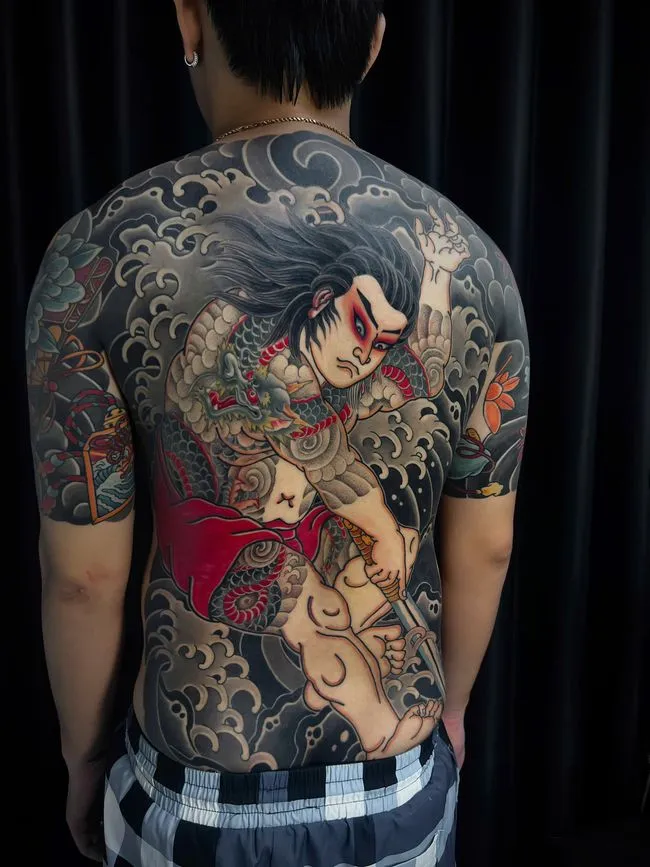
The naga shows up constantly in Southeast Asian temple art and tattoo references alike, but it’s often lumped in as “just another dragon” — which genuinely misses a distinct, well-documented tradition of its own.
A real serpent deity, not a generic snake
The naga is a specific being from Hindu and Buddhist mythology: a serpent deity, often shown as a great cobra or a multi-headed hooded serpent rather than a four-legged, whiskered dragon. The tradition traces back to ancient Indian mythology and spread through Buddhist practice across South and Southeast Asia, where nagas are consistently associated with water — rivers, rain, and the fertility that comes with them — and cast as guardians of sacred places rather than as threats to be defeated.
Mucalinda: a specific, named episode carved into temples across the region
One particular story is carved and painted across Southeast Asian Buddhist art far more than general “naga symbolism” gets credit for: the naga king Mucalinda sheltering the meditating Buddha from a week of storm rain by coiling his body beneath him and spreading his multi-headed hood overhead like a canopy. This “Buddha sheltered by naga” image is a real, recognizable pose in Khmer and Thai temple statuary — including at Angkor — and it’s worth knowing this specific episode by name rather than treating naga imagery as vaguely spiritual decoration.
Guardians of the threshold, and of the Thai sak yant tradition
Naga figures — often as paired serpent balustrades — flank the entrance staircases of Buddhist temples across Thailand, Laos, and Cambodia, functioning as protective guardians of the sacred threshold much like lion or dog statues do at temple gates elsewhere. That same protective, worldly-fortune reading carries into Thailand’s sak yant tattooing, where naga designs are one of several real, named motifs used in that tradition — our sak yant guide covers how that specific practice actually works, including where a decorative version outside Thailand differs from the blessed original.
Why it’s genuinely not the same as a Vietnamese dragon
This distinction matters here specifically: Vietnam’s own founding legend is a dragon story, not a naga one. Lạc Long Quân, the Dragon Lord, is said to have married Âu Cơ, and Vietnamese people traditionally refer to themselves as con Rồng cháu Tiên — “children of the dragon, descendants of the fairy.” That dragon (rồng) is depicted with legs, whiskers, and a long undulating body, distinct from the naga’s typically legless, hooded serpent form and separate Indian Buddhist origin. Our dragon tattoo meanings guide covers the Chinese, Japanese, and Western dragon traditions in more depth — worth reading alongside this one if you’re deciding between a naga and a dragon design, since they’re genuinely two different creatures with two different origin stories, even though they get visually confused constantly.
Modern secular meaning
Protection, guardianship of something valuable, and a connection to water and fertility are the readings most people land on today — all of which trace fairly directly back to the Mucalinda story and the temple-guardian role above, rather than being invented meanings.
What actually matters when choosing
If the guardian-and-protection reading is what you’re after, a naga’s specific visual markers — a hooded, multi-headed cobra-like crest, a legless serpentine body — keep the design honest to the actual tradition rather than drifting into generic dragon imagery. If you’re drawn to Vietnam’s own founding-myth dragon instead, that’s a distinct, legged creature with its own real story, not a stand-in for the naga.
What to expect at GOAT Tattoo Studio
We’re happy to talk through which tradition — naga, Vietnamese dragon, or something else entirely — actually fits what you’re picturing, at your consultation. Our sak yant guide is worth reading first if a naga design specifically drew you toward that tradition.
Related Guides
Ready to book your tattoo in Hanoi?
Send us your idea and preferred dates — we'll reply with a clear quote before you sit in the chair.
Book Now