 GOAT TATTOO
Tattoo Blowout: What It Is and How to Tell Before It's Too Late
Published September 21, 2026
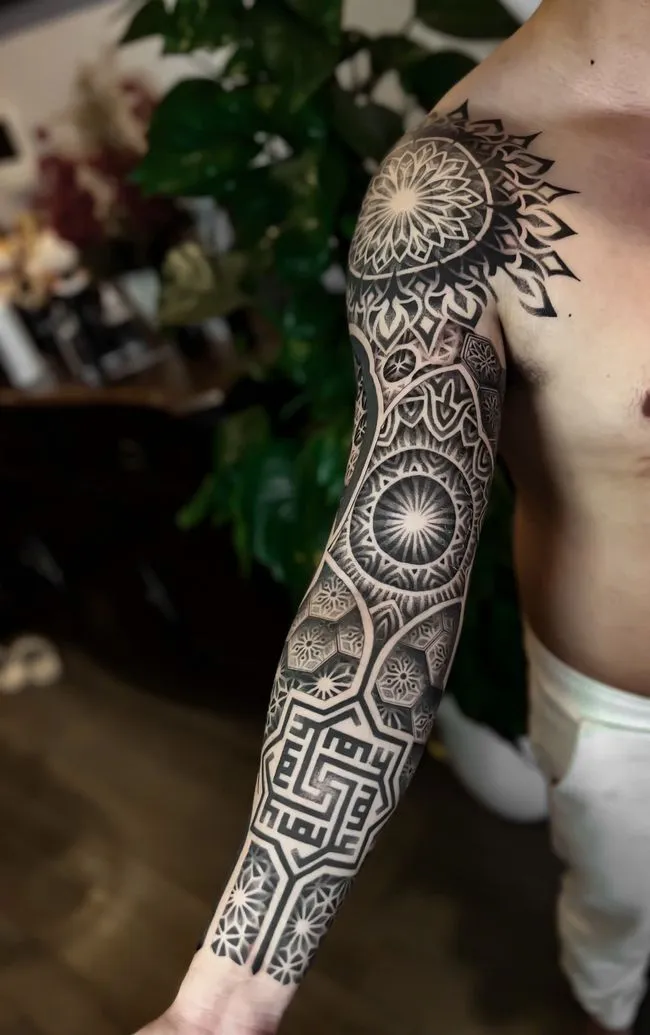
A few weeks after a tattoo fully heals, some people notice their crisp lines have a soft, blurry halo around them — like the ink bled sideways under the skin. This is called a blowout, and it’s one of the most common things people ask about online, usually with the same underlying fear: “did my artist mess this up, and can it actually be fixed?” It’s a real, permanent problem, but it’s also specific and well understood — not a mystery, and often preventable before the needle ever touches your skin.
What a blowout actually is
A tattoo needle is meant to deposit ink into a narrow band of skin called the dermis, just below the surface. A blowout happens when ink gets pushed past that band into the looser tissue underneath. Because that deeper layer isn’t structured to hold pigment in a fine line, the ink spreads outward instead of staying put — so a line that was tattooed sharp ends up healing as a soft, greyish smudge fanning out around the original shape. It’s not an infection and it’s not an allergic reaction; it’s ink sitting in the wrong layer of skin, permanently.
Why it happens
Blowout comes down to technique and placement, not bad luck:
- Needle depth or angle. Going in too deep, or holding the needle at too steep an angle, pushes ink past the dermis. This is the single biggest cause, and it’s a technique issue, not a design issue.
- Too much pressure or overworking a line. Going over the same line repeatedly, or pressing harder to “make sure the ink takes,” increases the risk — more passes means more chances for ink to migrate.
- Thin or loose skin. Areas like the inner wrist, fingers, ankles, and eyelids have less structural support under the dermis, so they’re more blowout-prone even with careful technique. This is part of why fine detail work in these spots costs more and takes longer — the artist has to work slower and shallower than on a forearm or thigh.
- Tattooing over already-irritated skin, including a fresh tattoo that hasn’t fully healed yet, or skin that’s been over-stretched during the session.
How to tell it apart from normal healing
This is the part that causes the most needless worry. In the first two to three weeks, every tattoo goes through redness, swelling, scabbing, and a slightly hazy look as skin regenerates — none of that is blowout, and it resolves on its own. The real test is time: normal healing gets sharper as the surface clears, while a blowout gets softer and wider the longer you look at it, and that blur doesn’t improve once the skin is fully healed (usually by week four). If your lines still look crisp under a healed layer of skin, you don’t have a blowout — you’re just impatient, which is completely normal too.
Can it be fixed
A true blowout can’t be reversed, but it can usually be improved. Depending on how much the line has spread, an experienced artist can sometimes rework the area with bolder linework or shading that absorbs the blur into the new design, similar to how a cover-up works on an unwanted tattoo. In milder cases, a touch-up with corrected depth can tighten a line back up significantly. Our guide to touch-ups, reworks, and cover-ups walks through what’s realistically possible once ink is already in the skin — the earlier it’s addressed, the more options you have.
How to avoid it before you start
The best fix is not needing one. A few things that actually matter:
- Pick an artist with real experience in fine-line or small detail work if that’s what you’re getting — depth control on thin lines is a specific skill, not something every artist has practiced equally.
- Be honest about placement risk. If you want detailed work on a wrist, finger, or ankle, ask your artist directly how they handle that spot and whether the design needs to be simplified to hold up long-term.
- Follow aftercare instructions closely in the first two weeks — skin that’s kept clean and not over-stretched or picked at heals more predictably, reducing added strain on lines that are still settling.
- Don’t ask for a line to be “gone over again” mid-session just because it looks light under fresh swelling — that’s usually normal, and unnecessary extra passes are a real contributor to blowout risk.
What to expect at GOAT Tattoo Studio
Depth control on fine lines is something we take seriously precisely because it’s permanent and hard to undo. Linker, our most experienced artist with 10+ years and multiple tattoo awards in Vietnam and Taiwan, trains the rest of the studio’s artists on exactly this kind of technique discipline, especially for detailed linework in higher-risk spots like wrists and ankles. If you’re planning fine detail work anywhere on thinner skin, bring it up at your consultation — we’ll tell you honestly if the design needs adjusting to age well, not just book the appointment.
Related Guides
Ready to book your tattoo in Hanoi?
Send us your idea and preferred dates — we'll reply with a clear quote before you sit in the chair.
Book Now