 GOAT TATTOO
Touch-Ups, Reworks, and Cover-Ups, Explained
Published August 19, 2026
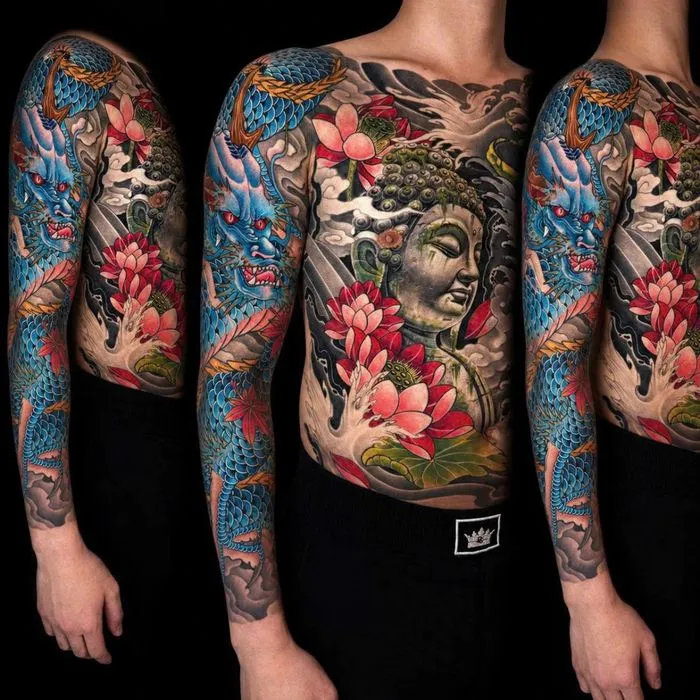
Not every tattoo question is about getting something new — a lot of people are actually thinking about fixing, extending, or completely changing a tattoo they already have. These are three genuinely different situations, each with its own realistic expectations, so it’s worth understanding what’s actually involved before you book.
Touch-ups: normal aging, not a mistake
A touch-up months or years after the original session is often completely normal, not a sign anything went wrong the first time:
- UV exposure breaks down pigment over time. Sun exposure is one of the biggest real drivers of fading, which is exactly why long-term color and clarity depend so much on sun protection, not just the original work.
- Tattoos soften naturally with age, as skin cells turn over and the ink settles deeper and slightly diffuses over years.
- High-friction, high-movement areas fade faster than others — hands, fingers, feet, and elbows in particular, simply because of how much wear that skin takes daily.
What’s different is a tattoo that heals unevenly from the start — patchy saturation, blurry edges, or spots where ink never fully took. That points to something in the original execution, not normal aging, and it’s worth mentioning specifically if you’re getting it touched up somewhere new.
Reworking or adding onto an existing tattoo
Extending a design, adding color to old black & grey work, or building a larger piece around something you already have is a real, common request — but it’s a different kind of project than working on fresh skin:
- The existing lines and values constrain the layout. New elements have to be designed around what’s already there, not placed freely.
- Old ink limits color and contrast choices. Whatever pigment is already in the skin affects how new color will actually look once it heals, not just how it looks on day one.
- Scar tissue or uneven old texture changes how new ink behaves, which is part of why this kind of work generally needs an experienced artist rather than being a simple “add-on.”
Done well, a rework can genuinely blend old and new into one coherent piece rather than looking like two different tattoos stitched together — which connects to the same composition and consistency skills that matter for any large-scale piece.
Cover-ups: how they actually work
A cover-up isn’t erasing the old tattoo — it’s designing something with enough contrast and dark value to visually overpower it. A few things that are genuinely true about how this works:
- The new design usually needs to be noticeably larger than the old one — often at least 25% bigger as a starting point, and sometimes 2-3x the size for a difficult cover-up. This is why “just cover it with something the same size” usually isn’t realistic.
- Darker, higher-contrast designs cover more effectively. Black tends to be the easiest color to hide underneath new work, since it gives the new piece a strong dark base to build on.
- Bright, light, or highly saturated colors are the hardest to cover — yellows, oranges, and pastels in particular, since there’s less natural contrast to work with.
- Laser fading is sometimes the honest answer before a cover-up is even possible. For tattoos that are too dark or too saturated for a workable redesign, even partial fading can open up design options that a direct cover-up couldn’t otherwise offer.
What actually determines whether your tattoo can be reworked or covered
The honest answer depends entirely on the specific tattoo — its color, size, saturation, and how old it is — which is exactly why this isn’t something to guess at from a photo alone. A design that would need laser fading first for one person might be directly coverable for another, depending on the ink itself.
What to expect at GOAT Tattoo Studio
Bring a clear photo of the existing tattoo to your consultation, along with any ideas or references for what you’d like it to become. We don’t have one fixed rule for every touch-up or rework request — every piece is different, so we’ll look at yours specifically and talk through what’s realistically possible before you commit to anything.
Related Guides
Ready to book your tattoo in Hanoi?
Send us your idea and preferred dates — we'll reply with a clear quote before you sit in the chair.
Book Now