 GOAT TATTOO
The Real History of Tattooing in Vietnam
Published September 12, 2026
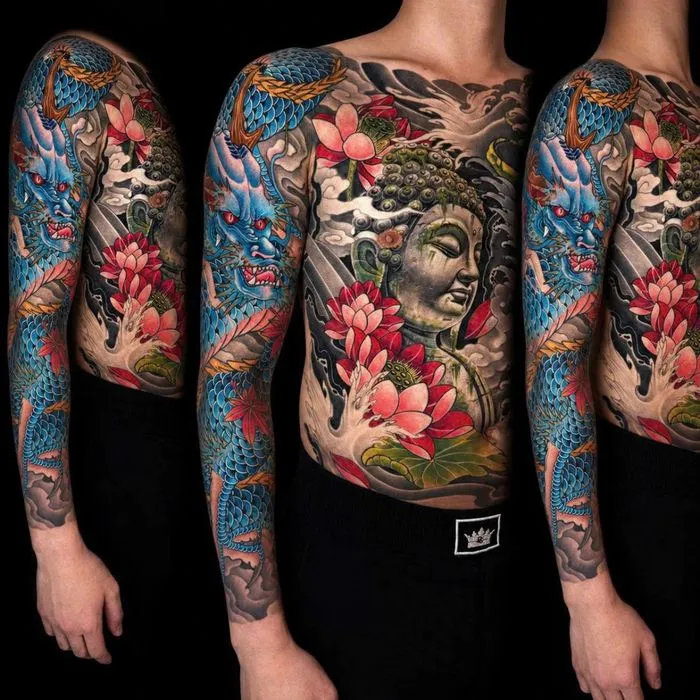
Tattooing in Vietnam has a longer and more specific history than most people getting one here realize — and it’s not a straight line from ancient tradition to today’s studios. It runs through a recorded practical custom, centuries of official discouragement, and a modern-era stigma before arriving at the industry that exists now.
A recorded, practical custom, not decoration
Vietnamese historical chronicles record that the ancient Lạc Việt — the people the Hùng Kings’ Văn Lang kingdom is traced back to — practiced xăm mình, tattooing images of aquatic creatures onto their bodies. The reasoning given in the old accounts is practical rather than decorative: people who fished and worked the rivers tattooed themselves to resemble water-dragons (thuồng luồng) so the creatures believed to inhabit those waters would recognize them as kin and leave them unharmed. This is a genuinely different starting point from most tattoo traditions covered elsewhere on this site, which tend to center on spiritual protection, status, or storytelling — this one is framed, in the surviving record, as camouflage.
Centuries of official discouragement
The chronicles also record the custom fading out well before the modern era, as later royal courts moved to align Vietnamese customs more closely with Chinese Confucian norms, which did not view tattooing favorably. By the time of later dynasties, the practice had largely disappeared from mainstream Vietnamese life, surviving mostly in folk memory and historical record rather than as a living tradition — a very different trajectory from, say, Japan’s irezumi or Thailand’s sak yant, both of which maintained continuous practice into the present.
The 20th-century stigma
Tattoos re-entered Vietnamese public life mainly through a negative association: 20th-century Vietnam increasingly linked tattoos with gangs, prison culture, and the criminal underworld, an association that persisted strongly through the more conservative decades of the late 20th century. That history is part of why older generations in Vietnam can still view a visible tattoo with real suspicion, even as the culture around them shifts — worth understanding as context, not judgment, if you’re getting tattooed here.
The modern revival
Vietnam’s tattoo scene has grown quickly since the 2000s, driven by economic opening, a generation with less attachment to the old stigma, and a steady flow of international travelers looking for custom work while visiting. Hanoi’s Old Quarter, along with Ho Chi Minh City and Da Nang, now has a genuine concentration of trained studios working in fine line, realism, blackwork, and more — alongside the recovery of interest in the older motifs this history left behind, like the Đông Sơn drum patterns and the chim Lạc bird covered in our heritage tattoo guide.
What actually matters today
None of this history is a reason to avoid a tattoo here — it’s context for why attitudes toward tattoos still vary noticeably by generation in Vietnam, and why older heritage motifs like the Đông Sơn drum and chim Lạc carry a specific, documented weight rather than being invented recently for tourists. Our guide on whether tattooing is regulated in Vietnam covers the current legal and practical picture if that’s your next question.
What to expect at GOAT Tattoo Studio
We work in both contemporary styles and the older motifs this history left behind — happy to talk through where a design idea actually sits in that history at your consultation, whether you’re after something rooted in the past or a fully modern piece.
Related Guides
Ready to book your tattoo in Hanoi?
Send us your idea and preferred dates — we'll reply with a clear quote before you sit in the chair.
Book Now