 GOAT TATTOO
Why Your Tattoo Can Look "Wrong" at the Stencil and Fresh Stages
Published September 21, 2026
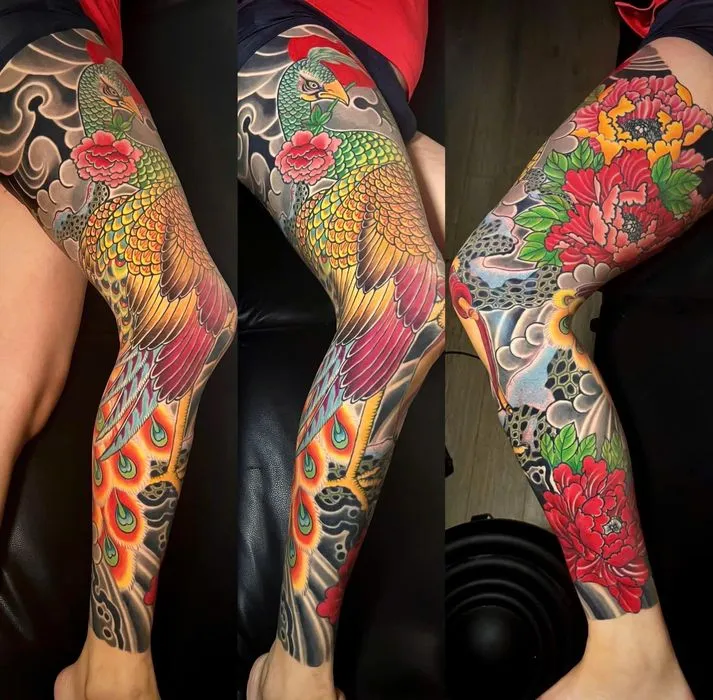
“Does this actually look like what I asked for, or am I losing my mind?” is one of the most common things people ask right before a tattoo starts, and again right after it’s done — usually staring into a bathroom mirror at 11pm, three inches from the skin, convinced something’s gone wrong. Most of the time, nothing has. Both of those moments genuinely distort how a design reads, for specific, explainable reasons — and it’s worth knowing what those are before you talk yourself into a panic over something completely normal.
Why the stencil stage is misleading
The stencil is a flat, 2D guide, not a preview of the finished piece, and a few things make it look “off” compared to how the healed tattoo will actually sit:
- It’s usually purple or blue transfer ink, not black or color — your brain reads that differently than it will read solid saturated linework, so proportions and weight can look strange purely because of the color.
- You’re looking at it too close, and often from the wrong angle. A design meant to be seen at a normal social distance, or from the front by someone else, looks completely different examined at arm’s length in a mirror — especially for placements like a shoulder blade or the back of an arm that you can’t view directly at all, only in a reflection, which itself reverses and skews things further.
- A stencil is flat; your body isn’t. A design that will wrap naturally around a curved, moving surface — a calf, a bicep, ribs — can look pulled or oddly proportioned as a flat outline before it’s actually settled onto that contour.
- Nerves narrow your focus. Right before a tattoo starts, most people are running on adrenaline, and that tends to make you fixate on one perceived flaw instead of seeing the design as a whole. This is genuinely a physiological thing, not a character flaw — it happens to people who are excited and people who are anxious about the pain equally.
Why a freshly finished (unhealed) tattoo also looks different
The tattoo you’re looking at the day it’s finished, or even a week later, is not the tattoo you’ll have once it’s healed:
- Swelling and redness widen and blur lines temporarily. Skin trauma from the needle causes real inflammation around every line, which can make crisp work look thicker or softer than it actually is underneath — this settles down over the first one to two weeks.
- Plasma and residual ink dull the color. In the hours right after, and during the peeling phase, a layer of healing fluid and shedding skin sits over the design, muting colors and contrast that will look noticeably cleaner once that layer is gone.
- Full color and contrast take the full healing window to show. Skin typically needs three to four weeks to settle completely — judging final vibrancy or line sharpness before then is judging an unfinished picture.
A more useful way to actually evaluate it
- Step back to a normal viewing distance instead of inspecting centimeter by centimeter. Most tattoos are read as a whole shape from a few feet away, not studied up close the way you’re studying it in that moment.
- View it from the angle other people will actually see it, not the one awkward mirror angle you happen to be twisted into.
- For placements you can’t see directly (back, shoulder blade, upper arm from behind), use two mirrors or a photo instead of trusting a single reversed reflection.
- Ask your artist to walk you through any asymmetry or spacing choice before assuming it’s a mistake — a lot of “off” details are intentional adjustments for how the design fits your specific anatomy, and a good artist will explain the reasoning, not brush off the question.
- Give it the actual healing window before judging final color, saturation, or line weight. Comparing week one to the reference image isn’t a fair comparison yet.
When something is actually worth flagging
Real problems don’t follow this “look worse up close, better with distance and time” pattern — they go the other way. If a line looks blurred or spread and gets more blurred as swelling fully resolves, that’s a genuine blowout worth discussing with your artist, not normal healing. If the design is visibly different from what you agreed to at the consultation — wrong element, wrong placement, missing detail nobody mentioned changing — that’s also worth raising immediately, ideally before the stencil is even tattooed over. The difference is specific and checkable, not a feeling.
What to expect at GOAT Tattoo Studio
We walk through the stencil with you before anything is tattooed, specifically so you have a real chance to ask questions or request small shifts while it’s still easy to fix. If something still looks uncertain once the piece is finished, we’d rather you ask us directly than sit with it — our consultation guide covers what to bring up before you even book, and we’re always reachable afterward if healing looks different than you expected.
Related Guides
Ready to book your tattoo in Hanoi?
Send us your idea and preferred dates — we'll reply with a clear quote before you sit in the chair.
Book Now