 GOAT TATTOO
Wolf Tattoo Meaning: Fenrir & the Lone Wolf
Published September 26, 2026
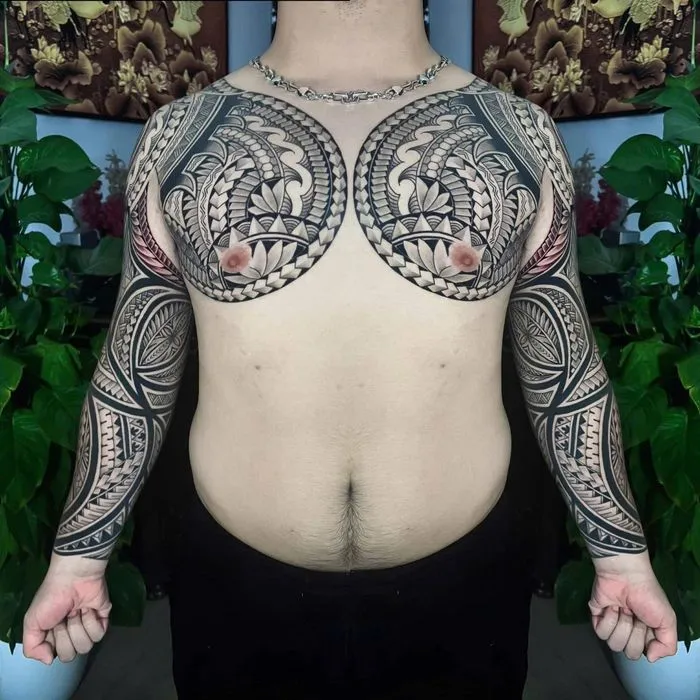
Few animals carry as much genuinely contradictory symbolism as the wolf — the same creature reads as either loyal family protector or apocalyptic destroyer depending entirely on which specific tradition and which specific wolf you’re actually drawing on.
Norse mythology: Fenrir, the wolf who kills a god
The most famous named wolf in Western mythology isn’t a hero — Fenrir is a monstrous wolf, son of the trickster god Loki, bound by the gods with an unbreakable chain forged from impossible things (a mountain’s roots, a cat’s footsteps, a woman’s beard) because of a prophecy that he’d bring destruction. That prophecy comes true at Ragnarök, the mythological end of the world, when Fenrir breaks free and kills Odin himself, the chief god of the Norse pantheon. A wolf tattoo drawing specifically on Fenrir isn’t about loyalty or family at all — it’s about fate, raw untamable power, and the idea that some forces can be delayed but never permanently contained.
The Turkic legend of Asena, the she-wolf mother
A genuinely different tradition comes from Central Asian and Turkic mythology: Asena, a she-wolf who rescues a wounded, sole-surviving boy from a massacred tribe and raises him, eventually bearing his children — the mythological ancestors of the Göktürks and, by extension, a founding legend claimed across various later Turkic peoples. Here the wolf is protective, maternal, and a literal ancestral origin point rather than a force of destruction — a wolf tattoo referencing Asena carries meanings of survival, lineage, and a people’s own founding story, distinct from both the Norse and the pack-loyalty readings.
Pack loyalty versus the lone wolf
Beyond named mythological figures, wolves carry a real behavioral symbolism rooted in how they actually live: wolves hunt and raise young in tightly bonded, cooperative packs, which is where the widespread association with loyalty, family, and social bonds genuinely comes from — not a vague idea of “wildness.” A lone wolf, by contrast, is a distinctly modern reading rather than an ancient one, and it means something close to the opposite: independence, self-reliance, and choosing to operate outside a group rather than within one. The same animal, shown alone versus shown with a pack, is doing meaningfully different symbolic work — worth being clear with your artist about which one you’re actually going for.
What actually matters when choosing
Because “wolf tattoo” covers such a wide range — a specific doom-bringing god’s monster, a nurturing ancestral mother figure, a loyal pack animal, or a solitary individualist — it’s worth being specific with your artist about which reading you actually want represented, rather than assuming the animal alone communicates it. Visual choices help carry the distinction too: a wolf howling alone under a moon reads very differently from a wolf shown running with others, and specific mythological references (a chain for Fenrir, a nursing pose for Asena) can anchor the piece to a particular story rather than a generic “wolf.”
What to expect at GOAT Tattoo Studio
Tell us which reading of the wolf actually speaks to you — mythological, behavioral, or purely personal — and we’ll help make sure the composition genuinely reflects it. Our broader animal tattoo meanings guide covers how wolves compare to other commonly requested animals if you’re still deciding.
Related Guides
Ready to book your tattoo in Hanoi?
Send us your idea and preferred dates — we'll reply with a clear quote before you sit in the chair.
Book Now