 GOAT TATTOO
Biomechanical Tattoos: What to Actually Look For
Published August 30, 2026
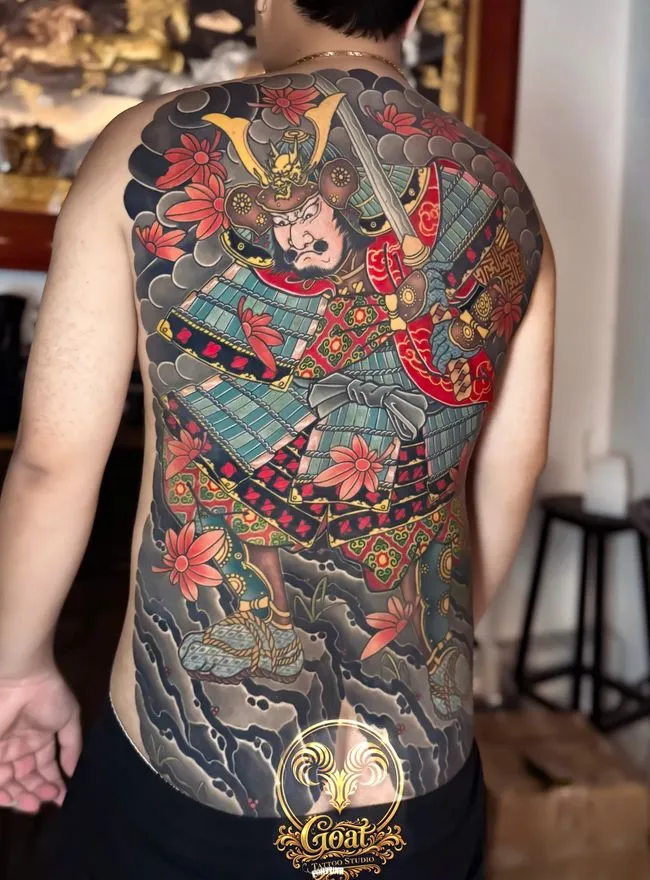
Biomechanical tattoos create the illusion that mechanical parts — gears, pistons, cables, exposed metal structure — exist underneath the skin, often blended with organic, muscle-like or exoskeleton-like forms. It grew out of the artwork of artists like H.R. Giger and found its way into tattooing as its own distinct style, and it’s genuinely one of the more technically demanding looks to pull off convincingly, since the illusion depends on far more than just drawing detailed machinery.
Why anatomy actually matters more than the mechanical detail itself
The single biggest factor separating convincing biomechanical work from a flat mechanical drawing wrapped around a limb is whether the design follows the body’s real underlying muscle and joint structure. Strong biomechanical tattoos are planned so that the “machinery” appears to move and flex the way the muscle underneath actually does — a piece over the bicep should visually compress and extend the way the muscle does, with mechanical elements that make anatomical sense at joints rather than crossing them arbitrarily. Weak biomechanical work treats the body as a flat canvas and wraps generic mechanical imagery around it without regard for how it should interact with actual anatomy, which is what makes it read as a sticker rather than something genuinely embedded in the skin.
Why depth and shading do the real work here
Because the entire concept depends on convincing the eye that something exists beneath the surface, shading and depth technique matter more in biomechanical work than in almost any other style — sharp, controlled black & grey gradients are what actually create the illusion of recessed mechanical parts, exposed layers, and dimensional structure. This is genuinely one of the reasons biomechanical work overlaps heavily with skilled black & grey realism technique, even though the subject matter is entirely invented rather than photo-referenced.
What actually separates strong biomechanical work from weak work
- Check whether the design genuinely follows the limb or body part it’s placed on, rather than looking like the same flat panel repeated regardless of placement — ask to see examples specifically on the same body part you’re considering.
- Look at how convincingly depth and shadow are rendered. Since the whole illusion depends on apparent depth, flat or muddy shading undermines the entire concept far more than it would in a style that isn’t trying to create a 3D illusion in the first place.
- Ask how the piece is planned to wrap and flow with movement, especially over a joint — a design that was clearly planned as a single static image rather than something that moves with the limb is a sign of weaker technical planning.
What to expect at GOAT Tattoo Studio
Browse our black & grey realism gallery for examples of the depth and shading control that strong biomechanical work depends on — we’ll talk through how your design should follow your specific muscle structure and movement at consultation, since that planning matters more here than in most other styles.
Related Guides
- Black & Grey Realism Tattoos: What to Actually Look For
- Blackwork & Tribal Tattoos: What to Actually Look For
- Blackout Tattoos: What to Actually Know Before Booking
- Dotwork & Stippling Tattoos: What to Actually Look For
- Lettering Tattoos: What to Actually Look For
- Getting a Memorial Portrait Tattoo, Done Right
Ready to book your tattoo in Hanoi?
Send us your idea and preferred dates — we'll reply with a clear quote before you sit in the chair.
Book Now