 GOAT TATTOO
Blackout Tattoos: What to Actually Know Before Booking
Published August 29, 2026
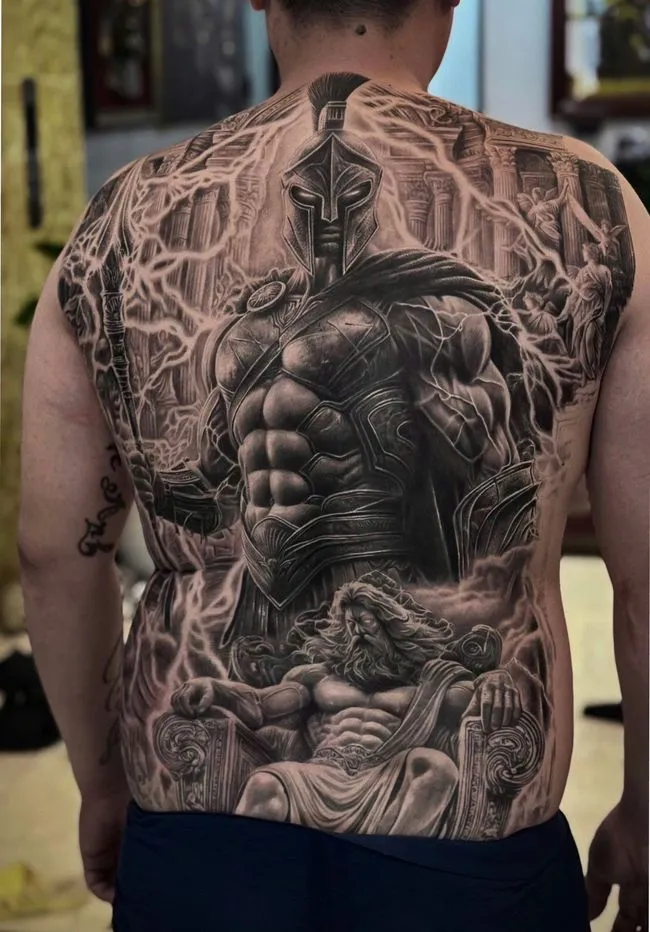
Blackout is often grouped with blackwork and tribal styles, but it’s genuinely its own thing — instead of bold outlines and open negative space, blackout means saturating a large area of skin with solid black ink, sometimes with negative-space patterns cut out of the black field. It’s a real commitment, both to the look and to a different healing process than most other styles, and it’s worth understanding what actually makes it different before booking.
How it’s actually different from blackwork and tribal
Our blackwork and tribal guide covers bold-outline, open-space work — blackout is the opposite approach in terms of coverage: instead of linework defining a shape against visible skin, the ink itself becomes the dominant surface, and any remaining skin shows up as intentional negative-space design rather than background. This makes blackout genuinely well-suited to covering an existing tattoo, since dense, saturated black ink is one of the more effective ways to fully obscure what’s underneath.
Why it heals and ages differently
A large solid-black area means significantly more total needle trauma across a bigger continuous section of skin than most other styles at a comparable size — this isn’t inherently more dangerous, but it does mean a genuinely longer and more involved healing process, and it’s worth planning for that rather than being caught off guard. Long-term, blackout doesn’t fade the way colored ink does — you won’t see hues shifting or fading toward a different color, but solid black can gradually soften toward a dark grey at the edges over many years, which is worth knowing going in as the realistic long-term look rather than expecting it to stay pure jet-black forever.
What to actually consider before committing
- This is a genuinely permanent, high-commitment choice. Because blackout covers so much surface area, it’s a much bigger project to later cover up or significantly modify than a smaller or more open piece — go in knowing this is close to a final decision for that area of skin.
- Ask about session planning for larger pieces. Full-limb or large-panel blackout work is often split across multiple sessions, similar to any other large tattoo project — our guide to multi-session preparation covers what to expect between sittings.
- If keloid-prone skin is a concern for you, the sheer density of trauma in blackout work is worth discussing directly at consultation — our guide to keloid-prone skin and tattoos covers what’s actually worth mentioning ahead of time.
What to expect at GOAT Tattoo Studio
We’ll talk honestly about realistic session planning, healing time, and how negative-space elements will read against the solid black at the consultation stage — every session uses single-use needles and sterile equipment, and you’ll have a confirmed price before any tattooing starts.
Related Guides
- Blackwork & Tribal Tattoos: What to Actually Look For
- Touch-Ups, Reworks, and Cover-Ups, Explained
- Dotwork & Stippling Tattoos: What to Actually Look For
- Lettering Tattoos: What to Actually Look For
- Trash Polka Tattoos: What to Actually Look For
- Watercolor & Illustrative Tattoos: What to Actually Look For
Ready to book your tattoo in Hanoi?
Send us your idea and preferred dates — we'll reply with a clear quote before you sit in the chair.
Book Now