 GOAT TATTOO
Getting a Polynesian Sleeve Tattoo: Sessions, Process, and What to Expect
Published September 26, 2026
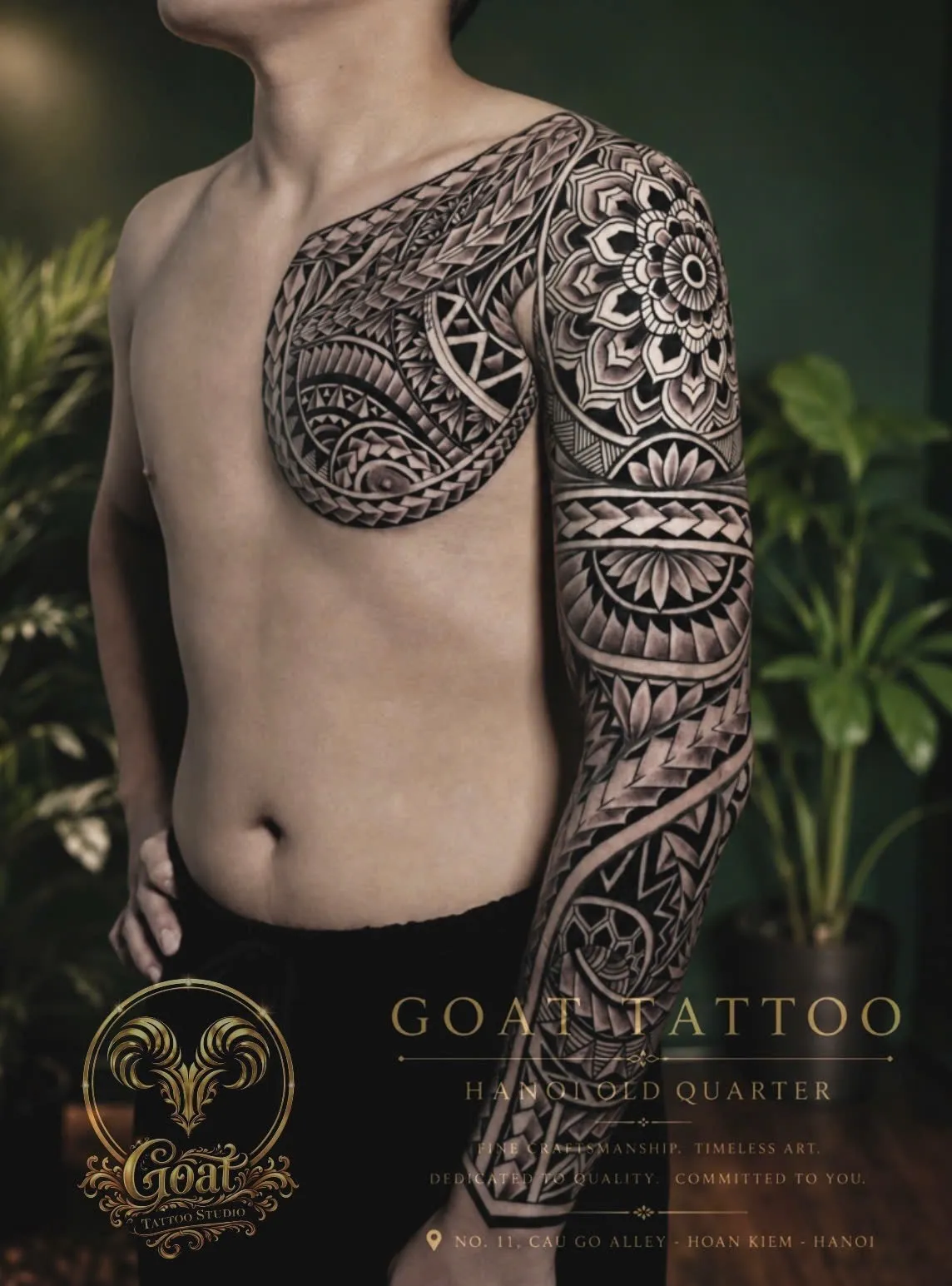
A Polynesian-style sleeve is one of the more genuinely collaborative full-piece projects you can commission, and it’s worth understanding how the process actually works before you book — it’s a meaningfully different experience from choosing a design off a wall and having it placed.
Why the design process takes real time
Unlike a flash piece that gets placed roughly as-is, a good Polynesian sleeve is composed specifically for your arm — the pattern needs to wrap around the natural curve of the bicep and forearm, flow across the elbow without breaking visually, and read as one continuous piece from shoulder to wrist rather than a stack of separate sections. That means real design time before the needle ever touches skin: a consultation to talk through which motifs you’re drawn to and what they actually mean (our Maori symbols guide and Polynesian symbols guide are a good starting point), followed by an artist actually drafting a composition mapped to your specific arm rather than a generic stencil resized to fit.
Realistic session counts and cost
A half-sleeve in this style typically falls in the $1,800–2,400 range, and a full sleeve or comparable full-back piece usually runs $3,600–4,800, in line with the Maori/Mandala figures in our full-piece pricing guide — dense blackwork at this scale is genuinely time-intensive work, not because the design is complex to draw but because solid, even saturation over a large area takes real hours in the chair. Expect multiple sessions rather than a single long sitting: your artist needs healing time between sessions to properly assess how the piece is settling before continuing, the same principle covered in our guide to preparing for a multi-session project.
How dense blackwork actually heals on a full arm
Solid black fill across a large area heals a bit differently than lighter work — expect more noticeable swelling and a slightly raised feel in the first several days, simply because of how much ink is being deposited across so much surface area. This is normal for the style, not a sign anything’s gone wrong, and it settles the same way any tattoo does over the following weeks. Because a sleeve covers a joint that bends constantly, movement and clothing friction are bigger practical considerations during healing than they’d be for a smaller, flatter placement — loose sleeves and being mindful of friction points (elbow crease especially) genuinely matters more here than on most other placements.
What to actually bring to your first consultation
Reference images are useful for showing the feel you want — density, flow, specific motifs — but go in expecting your artist to redesign around your actual arm rather than exactly replicating a photo. It’s also worth being upfront about your pain tolerance and schedule flexibility, since a project this scale is genuinely a multi-visit commitment, not a single afternoon.
What to expect at GOAT Tattoo Studio
Linker, our Maori and Polynesian specialist, has done some of the largest pieces in this style at the studio — browse our Maori-Polynesian gallery for full-sleeve examples, and we’ll map out a realistic session plan and honest cost estimate together at consultation before anything’s finalized.
Related Guides
Ready to book your tattoo in Hanoi?
Send us your idea and preferred dates — we'll reply with a clear quote before you sit in the chair.
Book Now