 GOAT TATTOO
Thuồng Luồng Tattoo Meaning: Vietnam's River Dragon & the First Vietnamese Tattoos
Published November 10, 2026
Short answer: a thuồng luồng tattoo means protection, especially on water, and a link to the oldest Vietnamese tattoo tradition. The thuồng luồng is a river dragon or water serpent from Vietnamese folklore, believed to live in deep pools and drown people. Vietnamese chronicles say the ancient Lạc Việt tattooed images of these water creatures on their bodies so the creatures would take them for their own kind and leave them alone. That makes it one of the few tattoo designs with a story that goes back to the very start of tattooing in Vietnam.
Most visitors know the Vietnamese dragon from temple roofs and royal art. The thuồng luồng is its wild, older relative, and it is a good choice if you want a Vietnamese design that is less common than a lotus or a dragon.
What a thuồng luồng is
In village stories the thuồng luồng lives in deep river bends, lakes and pools at the foot of waterfalls. It has a long scaled body like a giant snake, and in some pictures horns or short legs. When swimmers drowned or boats overturned, people often blamed the thuồng luồng. Older generations in some areas still warn children not to swim in certain deep spots for this reason.
The Sino-Vietnamese name for a similar creature is giao long (蛟龍), and the two are often treated as the same animal. In some retellings of the legend of Sơn Tinh and Thủy Tinh, the water god Thủy Tinh attacks the mountain with an army of water creatures that includes thuồng luồng.
The first Vietnamese tattoos
Vietnam’s main historical chronicle, the Đại Việt sử ký toàn thư, records that in the time of the Hùng Kings people who fished in the rivers were often attacked by water dragons. The king told them to draw images of water creatures on their bodies with ink. After that, the chronicle says, they were no longer harmed, and the custom of body tattooing began from there.
This is why the thuồng luồng is so meaningful as a tattoo: in the Vietnamese record, the first tattoos were not decoration but camouflage, a way to be accepted by a dangerous world instead of fighting it. Our history of tattooing in Vietnam follows the story further, including the Trần dynasty, when chronicles say members of the royal family had dragons tattooed on their thighs and soldiers tattooed “Sát Thát” (“kill the Mongols”) on their arms in 1285.
Thuồng luồng or Vietnamese dragon?
- The Vietnamese dragon (rồng) became a symbol of the emperor, rain, good harvests and the Vietnamese people themselves, who describe themselves as “children of the dragon and grandchildren of the fairy”. It is drawn with a curving body, a long snout and a calm, noble face. See our dragon tattoo guide.
- The thuồng luồng stayed a creature of the river: dangerous and wild, to be respected, not worshipped. In a tattoo it carries the meaning of protection and of making peace with danger rather than of power and luck.
If you want both, a common choice is a thuồng luồng rising from water below a dragon in the clouds.
What a thuồng luồng tattoo can mean today
- Protection on water: for divers, sailors, surfers, fishermen or anyone who spends time in rivers and the sea.
- Vietnamese roots: for Vietnamese people abroad, or anyone with family from the Red River delta, a direct link to the Lạc Việt.
- Respect for what you cannot control: floods, storms and deep water, or difficult times in life.
- Becoming part of a place: like the fishermen in the chronicle, adapting to a new environment instead of fighting it, which many long-term travelers relate to.
Design and placement
- Long body placements: the creature’s snake-like shape fits a forearm, calf, spine or a full leg wrapped around the limb.
- With water: waves, a river or a whirlpool around the body. Koi, the chim Lạc bird or patterns from the Đông Sơn drum link it to ancient Vietnam.
- Ink-wash style: black ink with soft grey water suits the old story.
- Blackwork or Đông Sơn style: a flat, graphic serpent inspired by bronze-drum art.
Because folklore descriptions vary, there is no single “correct” thuồng luồng. Bring the references you like and decide together with your artist which features (horns, legs, scales, whiskers) to keep, so it doesn’t end up looking like a Chinese or Japanese dragon by accident.
At GOAT Tattoo Studio
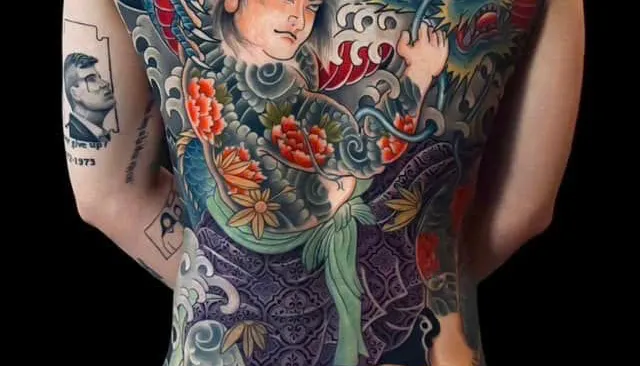
We’re a Vietnamese team in Hanoi’s Old Quarter, so the story behind this design is part of our own culture. Our gallery includes Japanese-style dragon work and a full back of a warrior grappling a dragon among waves, and our traditional Vietnamese tattoo page shows heritage designs like the chim Lạc and the Đông Sơn drum. We don’t have a finished thuồng luồng piece to show yet. At your consultation we can draw one for you, explain the story in English, and plan the size and flow for your body.
Related Guides
Ready to book your tattoo in Hanoi?
Send us your idea and preferred dates — we'll reply with a clear quote before you sit in the chair.
Book Now