 GOAT TATTOO
Getting Tattooed in Vietnam vs Other Countries: Japan, Korea, Bali, Singapore and More
Published October 29, 2026
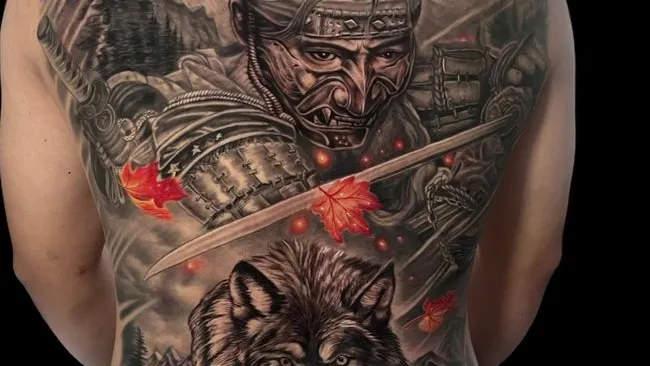
Short answer: Vietnam is one of the most affordable places in Asia for tattoo work at an international hygiene standard, and Hanoi in particular has many experienced artists used to working with travelers. Japan, South Korea, Taiwan, Singapore and Hong Kong offer excellent artists but usually at higher prices and with more booking friction; Bali, the Philippines, Laos, Myanmar and India can be as cheap or cheaper, but standards vary more from shop to shop; Germany and France have strong scenes at much higher rates. Whatever the country, choose by the artist’s healed work, hygiene and how the tattoo fits your itinerary, not by price alone.
Separate guides compare Vietnam with Thailand, Malaysia and Cambodia. Choosing between Vietnamese cities instead? See Hanoi vs other cities in Vietnam.
Countries compared in this guide
- Vietnam or Japan: Where Should You Get Tattooed?
- Vietnam or South Korea: Where Should You Get Tattooed?
- Vietnam or Taiwan: Where Should You Get Tattooed?
- Vietnam or China: Where Should You Get Tattooed?
- Vietnam or Hong Kong: Where Should You Get Tattooed?
- Vietnam or Singapore: Where Should You Get Tattooed?
- Vietnam or Bali: Where Should You Get Tattooed?
- Vietnam or the Philippines: Where Should You Get Tattooed?
- Vietnam or Laos: Where Should You Get Tattooed?
- Vietnam or Myanmar: Where Should You Get Tattooed?
- Vietnam or India: Where Should You Get Tattooed?
- Vietnam or Germany: Where Should You Get Tattooed?
- Vietnam or France: Where Should You Get Tattooed?
Vietnam or Japan: Where Should You Get Tattooed?
Short answer: if your trip continues on to Japan after getting tattooed in Hanoi, where the tattoo came from doesn’t matter for onsen access — what matters is whether it’s visible and whether that specific facility allows tattoos at all, since this is almost always a venue policy, not a national law.
Japan is an obvious draw if Japanese-style tattooing is what you’re after — it’s the origin of the style, after all. But “getting tattooed in Japan” and “getting a Japanese-style tattoo somewhere skilled” are two different questions, and it’s worth being honest about what actually changes if you do it there specifically.
The one genuinely unique thing Japan offers
Traditional irezumi, done by an artist working within an actual Japanese lineage — often hand-poked using traditional tebori technique rather than a machine. This is a real, non-replicable thing: the specific lineage, training, and cultural weight behind it isn’t something a studio elsewhere can claim to offer, even when the visual style is similar. If getting tattooed by a specific tebori master within that tradition is genuinely what you’re after, Japan is the only place that’s actually true.
For custom Japanese-style work more broadly — color, composition, the visual language of waves, koi, dragons, and phoenixes covered in our guide to Japanese tattoo motif meanings — that’s a different question. Skilled artists working in this style exist well outside Japan, including here; our color & Japanese-style guide covers what to actually look for in the work itself, regardless of where it’s done.
The real friction Japan involves that Vietnam doesn’t
This is the part that actually matters for planning a trip: tattooing itself is legal in Japan, but many onsen, sento (public bathhouses), ryokan baths, and some public pools refuse tattooed guests — this is typically a private venue policy rather than a national law, but it’s genuinely common enough to plan around. If soaking in an onsen is part of your Japan itinerary, you’ll likely need to seek out tattoo-friendly facilities, book a private bath, or use a cover-up patch. It’s a real, practical constraint that simply doesn’t exist for a tattoo you get in Vietnam.
What isn’t actually a clear difference
Pricing in Japan is genuinely hard to generalize — it varies enormously by artist, reputation, and the specific work, and top-tier traditional pieces can run expensive, but there isn’t a reliable single “Japan costs X” figure to compare against our Vietnam-wide pricing guide. Hygiene standards, similarly, come down to the individual studio in both places rather than the country as a whole.
The honest bottom line
If a specific tebori master or an authentic irezumi lineage is genuinely what you’re after, that’s a real reason to go to Japan specifically, and it’s not something we or most studios outside Japan can honestly claim to offer. For custom Japanese-style work more broadly — and without the onsen-access planning headache — a skilled studio elsewhere is a completely legitimate option.
Vietnam or South Korea: Where Should You Get Tattooed?
Short answer: South Korea’s 33-year ban on non-medical tattoo artists was actually overturned in September 2025 — tattooing by non-medical professionals is now legal, with a licensing system phasing in through October 2027, ending decades where only licensed doctors could legally perform it.
South Korea has a genuinely strong tattoo scene with a distinctive aesthetic, and it comes up often in travel-tattoo conversations. For decades it also had one of the more unusual legal situations of any major tattoo destination, which only changed very recently — worth understanding honestly before you decide where to sit down.
The real legal situation in South Korea
For most of the modern period, South Korean courts treated tattooing as a medical act that only licensed doctors could legally perform, based on a 1992 Supreme Court ruling — meaning non-medical tattoo artists had technically been operating in a legal gray area for over three decades, facing up to 5 years in prison or a 50 million won fine if caught. That changed on September 25, 2025, when South Korea’s National Assembly passed a bill legalizing tattooing by non-medical professionals in a near-unanimous 195–7 vote, ending one of the longest-running tattoo bans among major travel destinations. The new licensing system — a national exam, hygiene and safety training, and record-keeping requirements — phases in fully by October 28, 2027, with temporary registration available for artists in the meantime. Throughout the decades-long ban, it was genuinely artists, not clients, who carried the legal exposure — we don’t have solid information suggesting tourists getting tattooed ever faced legal risk themselves, even before this change.
What actually draws people to get tattooed in South Korea
Rather than one specific ancient tradition the way some destinations offer, South Korea’s tattoo tourism draw is really about a distinctive fine-line, delicate aesthetic associated with a number of well-known individual artists and studios — it’s a scene built around specific talent rather than a single national style everyone there does. If a particular Korean artist’s portfolio is genuinely what’s drawing you, that’s a real, specific reason to go; it’s not something that automatically transfers to “any studio in Korea.”
One cultural point worth knowing
Visible tattoos in South Korea have historically carried a stronger stigma than in much of Southeast Asia, often associated with organized crime in older generations’ perception, even as acceptance has grown noticeably among younger, urban Koreans. Some public facilities like bathhouses (jjimjilbang) have had policies affecting tattooed visitors, and rules can vary by venue — if this is part of your itinerary alongside getting tattooed, it’s worth checking the specific place’s policy rather than assuming either way.
What isn’t actually a clear difference
Pricing and quality both come down to the individual studio and artist rather than the country as a whole — South Korea has a wide range from accessible to premium, the same way Vietnam does, and there’s no reliable rule that one is cheaper once you’re comparing similar quality tiers. Our Vietnam-wide pricing guide covers what to actually expect here.
The honest bottom line
If a specific Korean artist’s style is genuinely what you’re after, that’s a real reason to seek them out specifically — but it means researching that individual artist, not assuming any studio in the country offers the same thing. For custom work more broadly, the deciding factor is the individual studio you walk into, not which country you’re standing in — and with the 2025 legalization, that comparison is now a more normal one than it used to be, rather than one complicated by decades of legal ambiguity on the Korean side.
Vietnam or Taiwan: Where Should You Get Tattooed?
Taiwan doesn’t come up in Vietnam-vs-country tattoo comparisons as often as Thailand or Japan, but it has a genuinely developed, internationally-connected tattoo scene and a real historical tradition behind it — worth knowing honestly if it’s part of your Asia itinerary.
The tradition Taiwan’s tattoo history actually grew out of
Long before Taipei’s modern studios, several of Taiwan’s indigenous peoples — including the Atayal, Truku, Seediq, and Saisiyat — practiced facial tattooing tied to real, specific milestones: for Atayal men, marking demonstrated bravery (often linked to headhunting in the pre-colonial era), and for women, marking skill at weaving. This wasn’t decorative in the modern sense — going without the marks could mean exclusion from marriage or from the tribe’s identity at death. Japanese colonial authorities banned the practice in 1913, and enforcement tightened further after the 1930 Wushe Incident, an armed Seediq uprising against colonial rule. Within a generation the living tradition had largely ended; Taiwan’s government formally recognized its last tattooed elders as cultural assets in 2016, and the last of them passed away in 2022, closing that lineage for good. It’s a genuinely distinct history — nothing like it exists in mainland Vietnam — and worth knowing apart from generic “tribal tattoo” branding.
What actually draws people to get tattooed in Taiwan today
Modern Taiwan’s draw isn’t that history directly — very few studios offer anything connected to it — it’s a mature, well-regarded scene across cities like Taipei and Kaohsiung with strong fine-line, illustrative, and Japanese-influenced work, no unusual legal barriers for tourists, and easy English-language booking for visitors. If a specific Taipei artist’s portfolio is genuinely what’s drawing you, that’s a real, specific reason to go; it’s a talent-driven scene rather than one built around a single national style.
Where price tends to differ
Taiwan’s studios generally run noticeably higher than Vietnam’s once you’re comparing similar quality tiers — small pieces are commonly priced in the low thousands of New Taiwan dollars, with larger custom work climbing well beyond that, compared with our own hourly rate of $77 for custom or larger pieces and $40 for a mini tattoo under 30 minutes. This isn’t a precise like-for-like exchange-rate comparison — individual artists set their own rates everywhere — but if budget is a real factor in your trip planning, it’s honest to say Vietnam tends to be the more affordable side of that comparison.
What isn’t actually a clear difference
Hygiene and safety come down to the individual studio, not the country. Both Taiwan and Vietnam have reputable, professional studios using single-use needles and sterile setups, and the real question to ask before sitting down anywhere is whether this specific studio actually follows those practices — our studio hygiene checklist covers what to check, and it applies in Taipei just as much as Hanoi.
The honest bottom line
If Taiwan’s indigenous tattoo history is what interests you, it’s worth understanding as a closed, historical tradition rather than something a modern studio there can recreate — the last people who carried it are gone. For present-day custom work, Taiwan offers a genuinely strong, easy-to-book scene, generally at a higher price point than Vietnam; which country makes sense really comes down to your budget and which artist’s specific portfolio you actually want.
Vietnam or China: Where Should You Get Tattooed?
If mainland China is part of your travel plans, it’s worth an honest comparison rather than assuming it works the same way as Vietnam’s more tourist-facing tattoo scene.
What’s actually different
- Tattoos still carry real social stigma in mainland China. Historically associated with organized crime and still viewed with more suspicion by older generations and some employers, tattoos in China have a documented cultural weight that’s genuinely different from Vietnam’s now much more mainstream, tourist-normalized attitude — even though the gap is narrowing among younger, urban Chinese generations.
- Chinese television and film visibly censor tattoos. Broadcast content in China routinely blurs or digitally covers visible tattoos on actors and performers — a specific, documented media practice, not a vague impression. It’s a real, current signal of how mainstream media there still treats the imagery.
- China isn’t really set up as a tattoo-tourism destination. Skilled artists absolutely exist in cities like Beijing, Shanghai, and Chengdu, with some earning international followings for realism and blackwork — but the infrastructure around walk-in, traveler-friendly, English-speaking tattoo tourism that Vietnam and Thailand have built up simply isn’t the norm there in the same way.
What’s not actually different
- Artistic skill isn’t a national gap. China has genuinely talented tattoo artists working at a high level, particularly in its major cities — the difference is around accessibility and cultural context for a foreign traveler, not raw ability.
- Hygiene comes down to the individual studio, not the country. Wherever you’re considering getting tattooed, the real question is whether that specific studio uses single-use needles and sterile equipment — our studio hygiene checklist applies just as much there as it does in Hanoi.
The honest bottom line
If you’re specifically seeking out a particular Chinese artist’s style and you’re comfortable navigating a scene that isn’t built around foreign travelers the way Vietnam’s is, that’s a legitimate reason to get tattooed in China. For most travelers passing through on a shorter regional trip, Vietnam’s combination of skilled artists, walk-in accessibility, and a culture where getting tattooed as a tourist is genuinely normal makes it the easier, more straightforward choice.
Vietnam or Hong Kong: Where Should You Get Tattooed?
Hong Kong and Vietnam both show up on the same regional itinerary a lot — a short flight apart, and often paired on a wider East or Southeast Asia trip. Hong Kong has a well-regarded, internationally connected tattoo scene, so it’s worth asking honestly how the two actually compare rather than assuming one is simply “better.”
What’s actually different
- Hong Kong’s cost of living, not tattoo quality, drives its higher prices. Hong Kong is consistently ranked among the most expensive cities in the world for rent and everyday costs, and studio space and artist rates reflect that directly — a piece of comparable size and skill level genuinely costs more there, and that gap is about real estate and wages, not a difference in craftsmanship.
- Hong Kong’s extreme scarcity of physical space shapes how its studios operate. Retail and studio space is famously limited and expensive in Hong Kong, so many studios run small, appointment-only setups rather than larger walk-in-friendly shops. If you’re hoping to walk in and get tattooed the same day, that’s a harder ask there than in Hanoi’s Old Quarter, where a denser cluster of studios makes same-day, in-person portfolio browsing genuinely easier.
- English is an official language in Hong Kong, a legacy of its history as a British colony, so consulting directly with a Hong Kong artist in English is usually straightforward without needing translation help. In Hanoi, that gap is real but manageable — our guide to the language barrier during a tattoo consultation covers how studios like ours bridge it.
- Direct flights connect Hanoi and Hong Kong in a couple of hours, which makes it easy to get tattooed in one city early in a trip and let it heal before you reach the other — useful if your route includes swimming, diving, or heavy sun exposure at either stop.
What’s not actually different
- Skill level isn’t a national gap. Both places have internationally skilled artists working in fine line, realism, blackwork, and color — which one is “better” for your specific idea comes down to the individual artist’s portfolio, not which city they’re in.
- Hygiene comes down to the individual studio, not the city. Hong Kong’s general reputation for being well-run doesn’t automatically make every studio there better set up than a well-equipped Vietnamese one, and Vietnam’s more relaxed general regulatory environment doesn’t mean every studio here cuts corners either — our studio hygiene checklist covers what to actually check before booking anywhere.
The honest bottom line
If budget and the flexibility to walk in and compare studios in person matter to you, Vietnam’s tattoo scene genuinely offers more room to work with. If you’re specifically after a particular Hong Kong-based artist’s style, or an English-first consultation without any language gap matters more to your decision than cost, that’s a legitimate reason to choose Hong Kong — but it isn’t a case of one place being categorically better at tattooing than the other.
Vietnam or Singapore: Where Should You Get Tattooed?
If your Southeast Asia route covers both countries, this is a fair question — Singapore has a modern, internationally regarded tattoo scene, so it’s worth asking honestly how it actually compares rather than assuming one is simply “better.”
What’s actually different
- Singapore enforces tattoo age restrictions more strictly. Getting tattooed under 18 is against the law in Singapore and this is actively enforced, not just a studio policy — a genuinely stricter, government-backed rule compared to Vietnam, where enforcement leans more on individual studio judgment.
- Cost of living, not tattoo quality, drives Singapore’s higher prices. Singapore is consistently ranked among the most expensive cities in the world, and studio rent and artist rates reflect that directly — a piece of comparable size and skill level genuinely costs more there, and that gap is about real estate and wages, not a difference in craftsmanship.
- Singapore’s scene skews toward booked appointments, not walk-ins. Well-known Singaporean studios and artists tend to be booked out further in advance, so if you’re hoping to walk in and get tattooed same-day, that’s a harder ask there than in Hanoi’s more walk-in-friendly Old Quarter scene.
What’s not actually different
- Skill level isn’t a national gap. Both countries have internationally skilled artists across fine line, realism, blackwork, and color work — which one is “better” for your specific idea comes down to the individual artist’s portfolio, not which country they’re in.
- Hygiene comes down to the individual studio, not the country. Singapore’s general reputation for strict regulation doesn’t automatically make every studio there better run than a well-equipped Vietnamese one, and Vietnam’s more relaxed general regulatory environment doesn’t mean every studio here cuts corners either — our studio hygiene checklist covers what to actually check regardless of which country you’re in.
The honest bottom line
If budget and flexible, same-day booking matter to you, Vietnam’s tattoo scene genuinely offers more room to work with. If you’re specifically after a particular Singapore-based artist’s style, or age verification and formal regulation matter more to your decision than cost, that’s a legitimate reason to choose Singapore — but it isn’t a case of one country being categorically better at tattooing than the other.
Vietnam or Bali: Where Should You Get Tattooed?
Bali shows up constantly in “best places to get tattooed while traveling Asia” lists, so if it’s part of your route, it’s a fair question to ask honestly. The short version: Bali’s draw isn’t a single unique tattoo tradition the way some other destinations offer — it’s the sheer density of skilled custom studios on one island, which is a genuinely different kind of appeal.
What Bali’s tattoo scene actually offers
There isn’t one clearly documented, Bali-exclusive tattoo tradition that a studio elsewhere can’t replicate — unlike, say, Thailand’s Sak Yant or the Philippines’ Kalinga hand-tapped tradition. What Bali genuinely has is a very concentrated, high-end custom tattoo scene, with a large number of skilled artists working fine line, blackwork, realism, and Indonesian/Balinese-influenced symbolism within a small geographic area. If what draws you is browsing a huge number of strong portfolios in one place, that’s Bali’s real strength — not a specific style you can only get there.
What isn’t actually a clear difference
- Price isn’t a clean national gap. Bali’s pricing spans a wide range — from budget work to premium custom-studio rates — the same way Vietnam’s does. Our Vietnam-wide pricing guide covers what to actually expect here; there’s no reliable “Bali is cheaper” or “Vietnam is cheaper” rule once you’re comparing similar quality tiers.
- Quality varies studio to studio, not by country. Both destinations have excellent artists and both have shortcuts being cut somewhere. Which country you’re in isn’t the deciding factor for how good the work will be.
Where the real risk sits in Bali specifically
This is worth being direct about: Bali’s tattoo scene has a real, documented split between professional studios with proper sterilization and informal or budget operators where hygiene standards genuinely slip — infection risk, including blood-borne disease transmission, has been a real concern in unregulated settings there. The cheapest option in a backpacker-dense area is not automatically the safest one. Our studio hygiene checklist covers exactly what to check before sitting down — single-use needles, visibly sterile setup, an artist willing to answer questions — and it applies just as much walking into a studio in Canggu or Ubud as it does here.
One cultural point worth knowing if Bali is part of your trip
Visible tattoos are generally a non-issue day to day in Bali, but temple visits and ceremonial settings call for more conservative dress and coverage out of respect — worth planning for if temple-hopping is on your itinerary alongside getting tattooed.
The honest bottom line
If what you want from Bali is access to a huge concentration of strong custom artists in one place, that’s a real and legitimate reason to go — it’s just not a “you can only get this in Bali” style or tradition the way some other destinations offer. For everything else, the deciding factor is the individual studio you actually walk into, not which country you’re standing in.
Vietnam or the Philippines: Where Should You Get Tattooed?
If the Philippines is part of your route, there’s one specific reason it comes up in tattoo travel conversations — and it’s genuinely a different thing entirely from choosing between two custom studios in two different countries.
The one genuinely unique thing the Philippines offers
Batok — the living, hand-tapped tattoo tradition of Buscalan in the Kalinga region, associated with the Butbut/Kalinga culture and practiced by artists trained within or descended from that lineage. This isn’t a “style” you can request at a custom studio elsewhere; it’s a specific indigenous practice tied to a specific community, and the trip itself is genuinely part of the experience — remote mountain access, a guide, community fees, and limited infrastructure along the way. If this particular tradition is what draws you, it’s a real, non-replicable reason to go there specifically, and it shouldn’t be treated as interchangeable with a “tribal-style tattoo” done anywhere else.
For custom Western-style, fine line, blackwork, or realism work more broadly, that’s an entirely separate question — skilled studios doing all of it well exist in plenty of places, including here.
What’s genuinely different about the experience, not just the art
Batok is a community-based, folk tattoo practice, not a clinical procedure — it typically uses traditional thorn implements and soot-based ink rather than modern tattoo equipment. This isn’t a knock on it; it’s simply a different tradition with different standards than a modern studio, and it’s worth understanding that distinction going in. Respect, patience, and asking permission genuinely matter here in a way that goes beyond ordinary studio etiquette, since you’re a guest in a specific cultural practice, not a customer browsing a portfolio.
What isn’t actually a clear difference
Outside of batok specifically, pricing and quality in the Philippines’ broader custom tattoo scene follow the same pattern as anywhere else — it varies by studio and artist, not by country, and there’s no reliable rule that one country is cheaper or better than the other once you’re comparing similar quality tiers. Our Vietnam-wide pricing guide covers what to actually expect here for custom work.
The honest bottom line
If batok specifically is what you’re after, that’s a genuine, well-founded reason to make the trip to Kalinga — it’s not something any custom studio, including ours, can honestly offer as an equivalent. For custom work more broadly, the deciding factor is the individual studio and artist, not which country you’re standing in.
Vietnam or Laos: Where Should You Get Tattooed?
Laos comes up less often than Thailand or Cambodia in Southeast Asia tattoo conversations, but it’s a genuine stop on the same backpacker route through the region — and it has its own real, specific tattoo traditions rather than being a blank spot between its neighbors. Here’s an honest look at how the two actually compare.
Laos’s own tattoo traditions are real and specific
Traditional Lao tattooing includes a style sometimes called “breeches” tattooing — dense, dark decorative patterns of lions, birds, monkeys, and elephants worked from the waist down to the knee, closely related to the style historically seen among Myanmar’s Shan people. It was primarily decorative and tied to marking a man’s maturity, though some also believed it carried protective power. Separately, Laos has its own version of sacred protective script tattooing, sometimes referred to through the older “black-bellied Lao” (Lao Phung Dam) tradition of tattooing protective khatha — script drawn from Khmer, Sanskrit, or Pali — onto the torso. This is a genuine regional cousin of Thailand’s better-known Sak Yant and Cambodia’s own yantra tradition, all tracing back to the same Khmer Empire–era roots, though the precise historical lines between the Lao, Thai, and Khmer forms aren’t something we can state with full precision. These are two distinct traditions — decorative tribal patterning and sacred protective script — not one generic “Lao tribal tattoo” idea.
A history of real isolation, and a studio scene still finding its feet
Both traditions are now mostly seen on older generations rather than actively practiced, and Laos’s decades under a single-party communist government after 1975, combined with genuinely limited tourism development until the country began opening up more in the 1990s, meant a commercial tattoo studio scene took far longer to establish than in neighboring countries. What exists today is small and concentrated mainly in Vientiane and Luang Prabang, rather than the dense, easy-to-compare cluster of studios you’d find in Hanoi’s Old Quarter or Bangkok.
What isn’t actually different
Outside of these specific traditions, quality and hygiene in Laos’s small commercial scene come down to the individual studio and artist, the same as anywhere else in the region — there’s no reliable country-wide reputation to point to one way or the other. Our studio hygiene checklist applies just as much in Vientiane as it does here.
A cultural point worth taking seriously
If a genuine khatha script tattoo is what draws you to Laos specifically, it’s worth knowing this is a real spiritual practice rather than a decorative style to copy — getting one from a shop with no real connection to the tradition, purely for the look, is worth being upfront about with whoever you’re working with, rather than presenting it as something it isn’t.
Where each fits your itinerary
Laos makes sense if a genuine, respectful interest in its breeches-tattoo history or its own sacred script tradition is actually part of why you’re visiting. For custom Western-style, fine line, blackwork, or realism work, Vietnam’s larger and far more established studio scene gives you a lot more to compare — portfolios, reviews, and a real density of studios to visit in person — before you commit, which matters more for a bigger piece than for something small and quick.
The honest bottom line
If Laos’s own tattoo history is the actual draw, that’s a real and specific tradition worth learning about with care, not a generic “tribal Southeast Asia” souvenir. For a larger custom project, Laos’s studio scene is still too young and too thin on the ground for us to speak confidently about pricing or hygiene standards there, and Vietnam’s more established scene remains the safer choice.
Vietnam or Myanmar: Where Should You Get Tattooed?
Myanmar doesn’t come up in Southeast Asia tattoo conversations as often as Thailand or Cambodia, but it has its own genuine, distinct tattoo history — and a modern studio scene that looks very different from Vietnam’s. Here’s an honest look at how the two actually compare.
Myanmar’s own tattoo traditions are real and specific
Myanmar’s best-documented tattoo tradition comes from the Shan, a Tai ethnic group in the country’s east, whose men were historically tattooed in dense, dark patterns from waist to knee — sometimes called “breeches” tattoos for how they resemble tight trousers from a distance. The designs blended Buddhist imagery with nat (spirit) worship and animist protection symbols, and were widely believed to grant strength or invulnerability in battle. Separately, several Chin ethnic sub-groups in western Myanmar, including the M’uun and M’kaan, practiced facial tattooing on women as a coming-of-age rite going back well over a century, with each sub-group using its own distinct pattern. These are two genuinely different traditions from two different regions and peoples, not one generic “tribal Myanmar tattoo” — worth being accurate about if either is actually what draws you there.
A history of real suppression, and a real modern revival
Both traditions were actively discouraged under British colonial rule, and Chin facial tattooing specifically was banned by the government in the 1960s, which is why it’s now mostly seen on older generations rather than practiced today. Myanmar’s decades of military rule and isolation also meant almost no commercial tattoo studio scene existed until quite recently — Yangon reportedly had no real tattoo parlors as of the mid-2000s. That’s changed fast since, with a small but growing scene of professional studios in Yangon and Mandalay, and tattoos have even taken on new meaning as a visible symbol of resistance among protesters since 2021.
What’s not actually different
Outside of these specific historical traditions, Myanmar’s newer commercial tattoo scene follows the same pattern seen across the region: quality and hygiene come down to the individual studio and artist, not the country. Vietnam’s tattoo industry, and Hanoi’s Old Quarter cluster of studios specifically, has simply had far longer to establish itself, which means a much larger number of studios to compare portfolios and reviews against before you commit. Our studio hygiene checklist applies wherever you end up sitting down.
Where each fits your itinerary
Myanmar makes sense if a specific, respectful interest in Shan or Chin tattoo history is genuinely part of why you’re visiting — though a facial tattoo in the Chin tradition is not something to seek out as a souvenir, given its status as a specific rite belonging to particular communities and generations. For custom Western-style, fine line, blackwork, or realism work, Vietnam’s larger and more established studio scene gives you more to compare before choosing, and Hanoi in particular has the density of studios to make that comparison easy in person.
The honest bottom line
If you’re drawn to Myanmar specifically for its own tattoo history, that’s a real and distinct tradition worth learning about with care — but its commercial studio scene is still young, and pricing or hygiene standards there aren’t something we can speak to with confidence one way or the other. For a larger custom piece with an established studio to compare against others, Vietnam’s more mature scene is the safer bet.
Vietnam or India: Where Should You Get Tattooed?
Short answer: Indian travelers increasingly get tattooed in Vietnam rather than at home for a combination of real reasons — competitive pricing, a growing pool of skilled artists in tourist cities, the appeal of pairing a tattoo with a trip, and social settings away from home where ink carries less judgment than it sometimes still does in India.
Indian tourist numbers to Vietnam have been climbing fast, and plenty of trips now combine both countries — so this is a genuinely fair question, not a hypothetical one. The real answer isn’t “one country is better,” it’s that they’re not always offering the same thing.
Why so many Indian travelers choose to get tattooed on this trip, not at home
A few real factors drive this, not just one. Cost is a genuine part of it — exchange rates and lower operating costs in Vietnam mean the same budget often stretches further here than it would at home. Artist availability and variety in Vietnam’s tourist cities has grown quickly, with studios doing everything from fine line to full Japanese-style and realism work. There’s also a simple travel-pairing appeal: Vietnam is already a popular destination for Indian tourists for food, scenery, and affordability, so adding a tattoo to a trip that’s happening anyway is an easy decision. The last factor is more personal: tattoo acceptance in India has grown substantially in urban, younger, professional circles, but real stigma still exists in more conservative families and communities, and getting tattooed somewhere away from that social context removes a layer of friction some travelers would rather not deal with at home.
The one genuinely unique tradition India offers
Godna — a centuries-old hand-tattooing tradition practiced by tribal communities across northern and central India, including the Baiga, Gond, and Santhal peoples. Traditionally applied by women within the community rather than in a studio, Godna marks life stages — a girl’s first tattoo as a child, more added at puberty, marriage, and childbirth — and among some groups carries spiritual meaning tied to identity in the afterlife. This isn’t a “style” you can order at a shop, in India or anywhere else — it’s a living tribal practice, tied to specific communities and passed down through them, not something a tourist studio recreates. If you’re drawn to that history specifically, it’s worth knowing it exists in a very different context than a custom tattoo booking.
For custom Western-style, Japanese-style, fine line, blackwork, or realism work, that’s a separate question — both countries have skilled studios doing all of it well, particularly in India’s larger cities, and which one is “better” comes down to the individual artist, not the country.
What isn’t actually a clear difference
- Price isn’t a clean national gap. India’s tattoo pricing spans from budget rates in tourist-heavy areas to premium custom-studio pricing, the same way Vietnam’s does — there’s no reliable “India is cheaper” or “Vietnam is cheaper” rule once you’re comparing similar quality tiers. Our Vietnam-wide pricing guide covers what to actually expect here.
- Hygiene and safety come down to the individual studio, not the country. This is worth being direct about: enforcement of sterilization and licensing standards isn’t uniformly strict in either country, and tourist-dense areas in both places are exactly where corners are most likely to get cut. The real question to ask isn’t “which country is safer,” it’s “does this specific studio actually use single-use needles and sterile equipment” — our studio hygiene checklist covers what to actually check before sitting down, and it applies just as much in Goa or Delhi as it does in Hanoi.
One cultural point worth knowing if India is part of your trip
Tattoos depicting Hindu deities or sacred symbols like Om are widely considered disrespectful when placed below the waist, in line with broader Hindu tradition around where sacred imagery belongs on the body. It isn’t a legal matter, but it’s a real point of cultural sensitivity rather than a theoretical etiquette note — worth knowing before you sit down if you’re getting deity or Sanskrit imagery done anywhere on your trip, not just in India. Our guide to Om, Shiva, and trishul meanings covers this in more depth, and if you’re getting an actual Sanskrit or Hindi phrase, our Sanskrit and Hindi tattoo guide covers how to get it verified and accurate before it’s permanent.
The honest bottom line
If Godna’s history is what draws your interest, that’s a real, distinct tradition worth learning about — but it isn’t something we or most tourist-facing studios in either country recreate, and it shouldn’t be treated as interchangeable with a generic “tribal-style” tattoo. For everything else, the deciding factor really is the individual studio and artist you choose, not which country you’re standing in when you choose them.
Vietnam or Germany: Where Should You Get Tattooed?
If you’re German, live in Germany, or your Vietnam trip connects back through a German airport, this comparison is worth asking honestly rather than assuming Vietnam automatically wins on price or Germany automatically wins on standards. Germany has one of Europe’s most respected tattoo scenes, and the real differences between the two countries aren’t the ones most “cheap tattoo abroad” guides mention.
Regulation exists in both places, structured differently
Germany doesn’t have one single national tattoo law — hygiene requirements fall under the federal Infection Protection Act (Infektionsschutzgesetz, IfSG §36), and each of Germany’s 16 federal states then sets its own detailed hygiene ordinance on top of that. In practice this means the local Gesundheitsamt (health authority) can inspect a studio, announced or not, check for a written hygiene plan and documented sterilization records, and order a studio closed for violations. Vietnam has no equivalent nationwide licensing or mandatory hygiene certification for tattoo studios — oversight here comes down to the individual studio’s own standards rather than a government inspector’s sign-off. Neither system guarantees a specific studio is careful; they’re just different starting points, and Germany’s is more formally documented.
The one genuinely unique thing Germany’s tattoo scene has to work around
Since a 2022 EU REACH regulation, and specifically since January 2023 for two commonly used pigments, tattoo inks sold across the EU — including Germany — have been restricted from containing certain colorants, most notably Pigment Blue 15:3 and Pigment Green 7. Industry estimates put the impact at roughly two-thirds of the previously available color palette becoming non-compliant almost overnight, forcing German artists to reformulate or substitute pigments for vivid blues and greens specifically. This isn’t a vague “Europe has more rules” claim — it’s a specific, dated regulatory change that has genuinely altered what’s mixed into the ink at a German studio. Vietnam isn’t bound by EU REACH, so studios here aren’t working under the same pigment restrictions. That’s not automatically a safety advantage either way — it’s simply a real, concrete difference if you’re set on a specific saturated blue or green in your design.
Price isn’t the clean gap people expect
The instinct is “Vietnam is dramatically cheaper,” and there’s some truth to it, but it’s not a blanket rule. Germany’s scene spans from student-artist apprentice rates to premium Berlin studio pricing that rivals anywhere in Western Europe, the same spread Vietnam has at its own low and high ends. Vietnam’s real advantage is less “the tattoo itself is always cheaper” and more that the whole trip — flights aside — costs less, so a custom piece here often gets folded into an already-affordable travel budget. Our Vietnam-wide pricing guide covers what to actually expect rather than a blanket “Asia is cheap” assumption.
What isn’t actually different
- Hygiene still comes down to the individual studio, not the country. Germany’s state-level inspection system raises the documented floor nationally, but it doesn’t guarantee any single studio is meticulous day to day, and a Vietnamese studio without a government-issued certificate can still run an impeccably sterile setup. The real question is always whether that specific studio uses single-use needles and proper sterilization — our studio hygiene checklist covers what to check before booking anywhere.
- Artistic skill isn’t a national gap. Germany’s convention scene (Berlin’s tattoo convention is one of the largest in the world) has produced genuinely world-class blackwork, neo-traditional, and illustrative artists — but so has Vietnam’s newer, internationally connected scene. The deciding factor is the individual artist’s portfolio, not which passport they hold.
The honest bottom line
If a formally inspected, state-regulated hygiene system matters to you as a documented baseline, or you want a very specific EU-regulated ink formulation, Germany has that structure in place. If you’re already traveling through Vietnam, want a custom piece from a studio willing to do the same due diligence you’d ask of any studio anywhere, and aren’t fixated on a pigment caught up in the 2023 EU restriction, Vietnam is a genuinely solid choice — not just a cheaper one.
Vietnam or France: Where Should You Get Tattooed?
If you’re French, live in France, or your Vietnam trip is bookended by time back home, this comparison comes up a lot — and it’s a fair one to ask honestly, not just assume Vietnam wins on price. The two scenes are more alike than most quick “cheap tattoo abroad” guides suggest.
Regulation is genuinely stricter in France
Since 2008, tattoo artists in France have been legally required to complete a hygiene and infection-control training course and register with the regional health authority (ARS) before they can practice — this is a real, enforced national standard, not a recommendation. Vietnam has no equivalent nationwide licensing or mandatory hygiene certification for tattoo artists; oversight here comes down to the individual studio’s own standards rather than a government-issued credential. That doesn’t mean French studios are automatically safer or Vietnamese ones automatically riskier in practice — it means the starting point is different, and if a documented regulatory baseline matters to you, France has one and Vietnam doesn’t.
Price isn’t the clean gap people expect
The common assumption is “Vietnam is dramatically cheaper,” but that’s not quite right once you compare similar quality tiers. Established French studios, especially outside Paris, often price close to what a skilled custom studio in Vietnam charges per hour — the real difference shows up at the extremes, not across the board. Vietnam’s advantage is more about overall trip cost (accommodation, food, and travel are cheaper here) than a guaranteed discount on the tattoo itself. Our Vietnam-wide pricing guide covers what to actually expect here rather than relying on a blanket “Asia is cheap” assumption.
Both countries have strong, distinct tattoo cultures — just different ones
France has one of Europe’s most respected fine line and illustrative tattoo scenes, with Paris in particular known for minimalist and botanical-style work that’s influenced artists internationally. Vietnam’s strength is different: a fast-growing scene built around custom Japanese-style, black & grey realism, and geometric work, shaped by a newer generation of artists working directly with international travelers rather than a long-established domestic tattoo tradition. Neither is “better” — they’re different traditions with different specialties, and which one fits depends on the style you actually want.
What isn’t actually different
- Hygiene comes down to the individual studio, not the country. France’s licensing requirement raises the floor nationally, but it doesn’t guarantee any single studio is meticulous, and a Vietnamese studio without a government credential can still run an impeccably sterile setup. The real question is always whether that specific studio uses single-use needles and proper sterilization — our studio hygiene checklist covers what to check before booking anywhere, regardless of which country’s system is behind it.
- Artistic skill isn’t a national gap. Both countries have artists working at an internationally competitive level. The deciding factor is the individual artist’s portfolio, not which passport they hold.
The honest bottom line
If a documented, legally enforced hygiene standard matters to you as a baseline and price isn’t the deciding factor, that’s a real reason to consider getting tattooed in France. If you’re already traveling through Vietnam, want a custom piece in a style Vietnamese studios have built a real specialty in, and are willing to do the same due diligence on a specific studio you’d do anywhere, Vietnam is a genuinely solid choice — not just a cheaper one.
At GOAT Tattoo Studio
Our rates are fixed and the same for every client: mini tattoos under 30 minutes from $36 and $77 per hour for everything else, confirmed after a free consultation. Every session uses single-use needles and sterile equipment. See the Hanoi price guide for full rates or send us your idea through the booking page.
Related Guides
- Vietnam or Thailand: Where Should You Get Tattooed?
- Vietnam or Malaysia: Where Should You Get Tattooed?
- Vietnam or Cambodia: Where Should You Get Tattooed?
- Getting a Tattoo in Vietnam: Hanoi vs Saigon, Da Nang, Hoi An, Sapa and More
- Tattoo Prices in Hanoi 2026: From $36, $77/Hour, Sleeves From $1,100
- How Much Does a Tattoo Cost in Vietnam?
- How to Check a Tattoo Studio's Hygiene in Hanoi
- Getting a Tattoo on Holiday: When to Book It on Your Vietnam Trip
Ready to book your tattoo in Hanoi?
Send us your idea and preferred dates — we'll reply with a clear quote before you sit in the chair.
Book Now