 GOAT TATTOO
How a Sleeve or Back Piece Actually Gets Designed
Published August 21, 2026
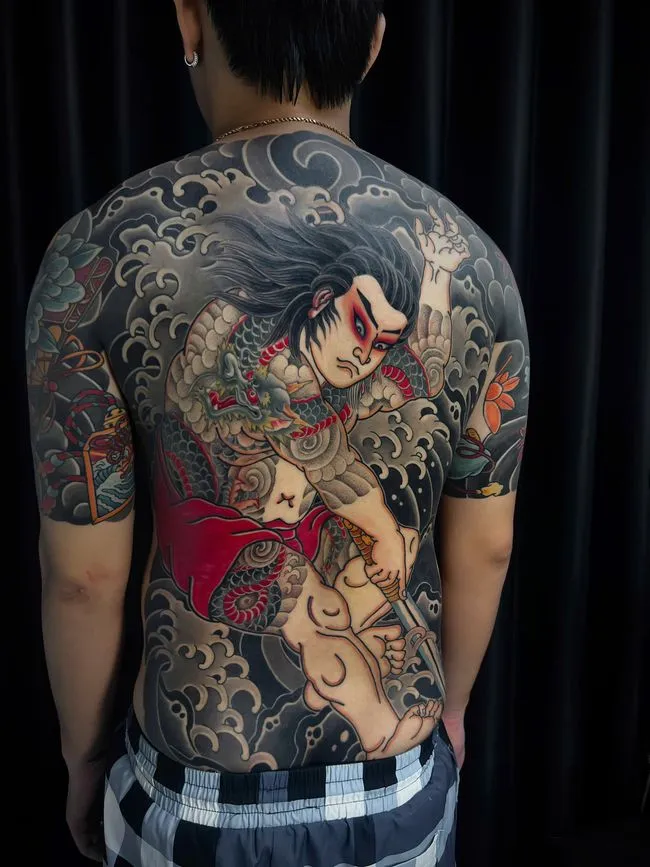
A full sleeve or back piece isn’t designed the way a small tattoo is — sketched once, transferred, done. The process behind a large multi-session piece is genuinely different, and understanding how it actually works makes the whole project feel a lot less mysterious going in.
It starts as one composition, not separate drawings
A large piece is planned around your specific body first, not as a set of individual images that happen to sit near each other. The artist places major focal elements where they’ll actually read well on your particular shape, then builds background and connective elements to unify everything into one flowing piece — this is why a good sleeve or back piece never looks like several unrelated tattoos placed side by side.
Why freehand drawing directly on skin is so common for large work
- A stencil alone doesn’t capture how a design should move with your body. For big, flowing compositions, many artists draw significant portions freehand directly on the skin, because that connects the design to your actual muscle, curvature, and movement in a way a flat printed stencil can’t.
- The stencil becomes more of a guide for key anchor points than the entire finished composition — the fine adjustments that make a large piece feel truly fitted to your body often happen in the room, not on paper beforehand.
How the order of sessions actually gets decided
There’s no single universal rule, but a few real patterns show up consistently:
- Artists often start with the strongest focal element or the most structurally important area first, so the core of the composition is established early — everything after that builds outward from something solid, rather than trying to connect pieces that were done in a random order.
- For backs specifically, placement often gets mapped around your centerline and shoulder movement early on, so later sessions don’t accidentally box in space that a future element needs.
How background and negative space actually connect everything
This is the part that separates a cohesive large piece from a collection of disconnected images:
- Clouds, water, wind bars, smoke, and even open, untattooed skin all function as connective tissue between separate focal subjects — especially in Japanese-style work, where this is a defining feature of the style itself, not just decoration. Our Japanese-style guide goes deeper into this tradition specifically.
- Background creates motion and visual hierarchy, guiding the eye through the piece rather than leaving each figure to float on its own — this is exactly the kind of composition problem that makes large-scale work genuinely harder than small tattoos.
How much gets locked in upfront versus left flexible
- The big picture is usually decided early: overall concept, major subjects, general placement, and the intended flow of the piece.
- The finer details are often deliberately left flexible — exact spacing, secondary elements, and background specifics commonly get refined session by session, as the composition genuinely reveals itself once real work is on skin rather than just sketched on paper.
This flexibility isn’t a sign of a loosely planned project — it’s a normal, expected part of how large work actually comes together well.
What to expect at GOAT Tattoo Studio
We’ll lock in the core concept, placement, and flow with you before the first session, and walk you through how much of the finer detail will be refined as we go — so you know what to expect from the process itself, not just the final result.
Related Guides
Ready to book your tattoo in Hanoi?
Send us your idea and preferred dates — we'll reply with a clear quote before you sit in the chair.
Book Now